The Unfinished History of Dennings Point
This project explores the cultural landscape of Dennings Point, a 64-acre site on the Hudson River about 25 miles from my house. It includes photographs of the site, studies for proposed new historical markers, and photographs of related archival materials.
I began the project after finding a brick in my Westchester garden marked with the initials “DPBW.” I discovered the brick was made at Dennings Point Brick Works, one of the largest Hudson Valley brick makers at the turn of the 20th century. DPBW bricks were used in large civic projects, including the Empire State Building and Rockefeller Center. Now a state park, Dennings Point itself has a much more complicated—and distinctly American—history marked by shifting boundaries between public and private space, racial and class conflict, unbridled industrialism, and environmental degradation.
In the 350 years since prominent Dutch enslavers took possession from the Wappinger people of Dennings Point as part of the 85,000-acre Rombout Patent, the area has been the site of estates, reported sojourns by Revolutionary War figures (including George Washington and Alexander Hamilton), an archaeological dig in the 1880s that unearthed Native American remains, the massive brick factory (which instituted a whites-only hiring policy in 1920s), a railway project for which the forest was clear-cut, a public swimming beach, and a short-lived environmental center, which the sponsoring university withdrew from just last year.
Some chapters in this history are well-documented, others often elided, especially from public signage. As I continue this project, I hope it can express a more holistic, inclusive, and complex understanding of this and similar sites as deeply contested and embedded in the power structures that have shaped them and that lie at the core of U.S. history.
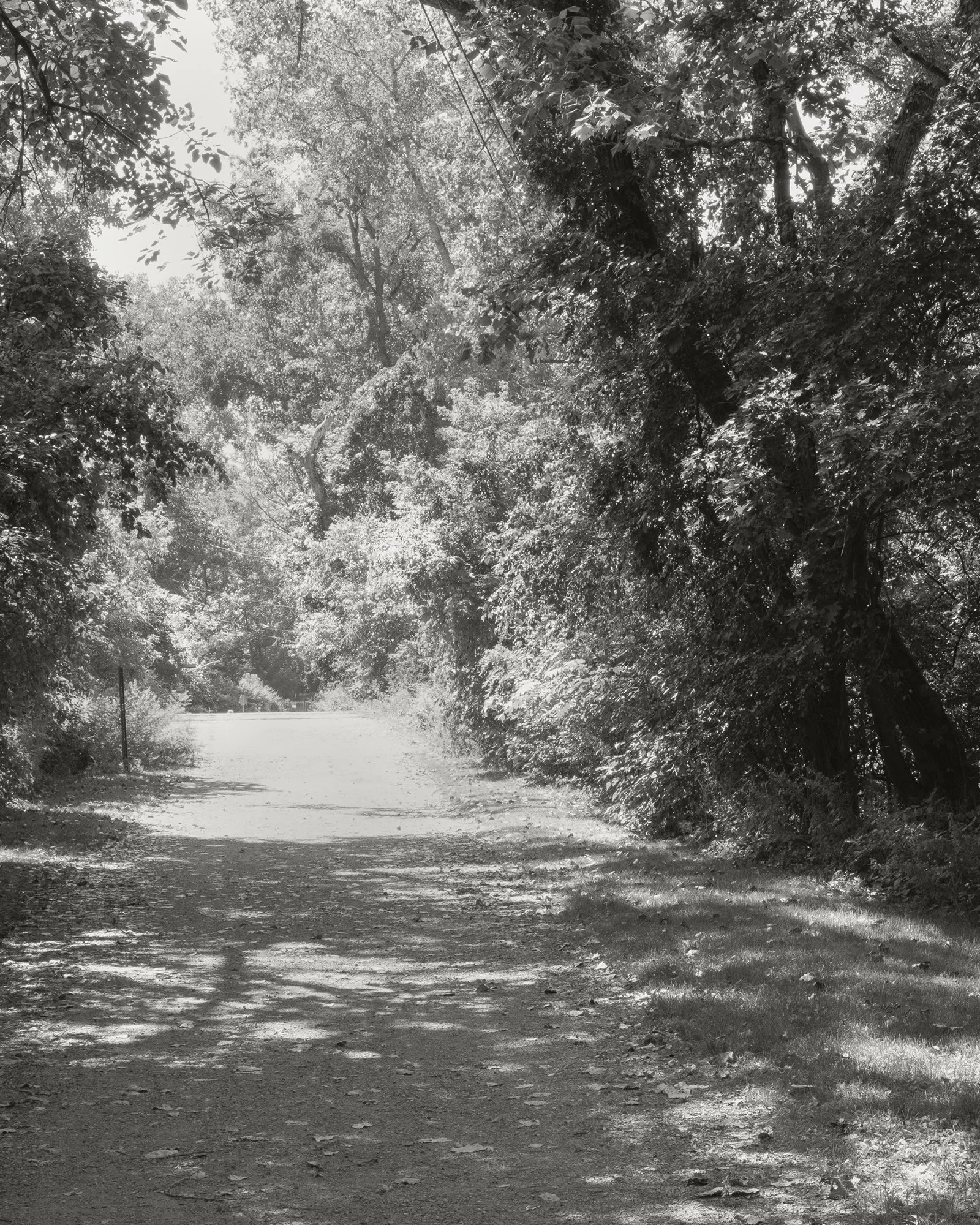
Entrance, 2025, archival pigment print, 25 in. x 20 in.
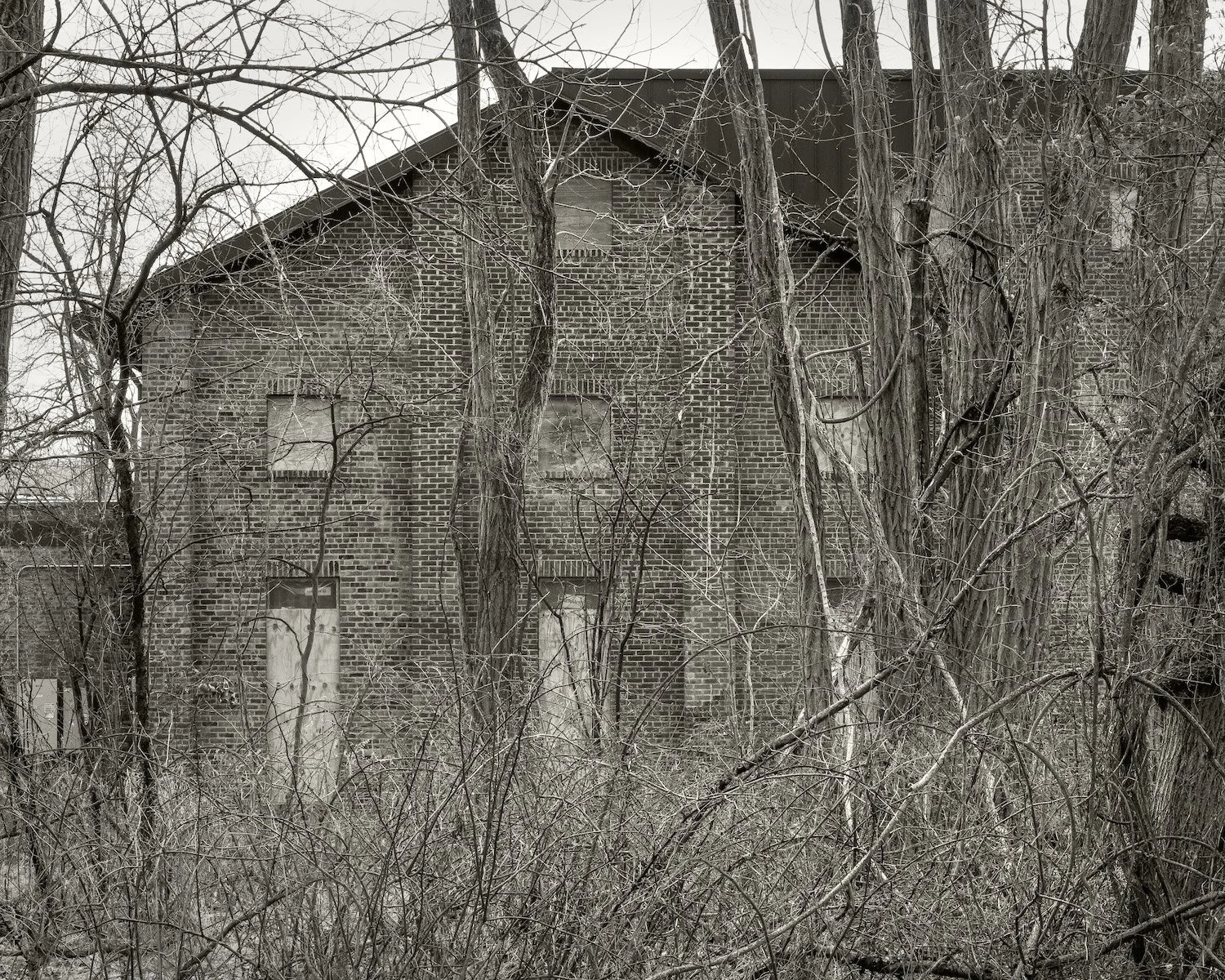
North Façade, 2026, archival pigment print, 20 in. x 24 in.
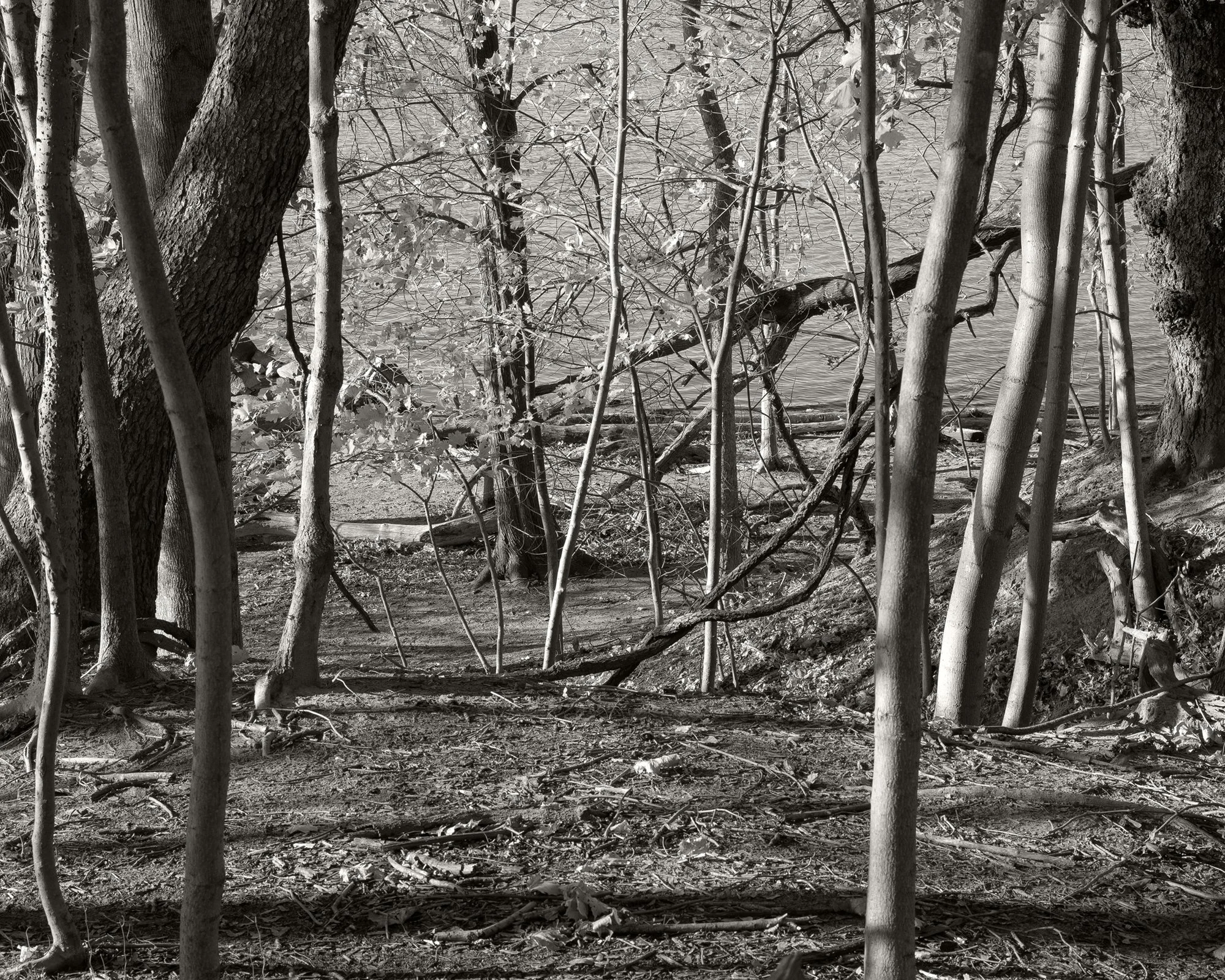
River's Edge, 2025, archival pigment print, 20 in. x 25 in.
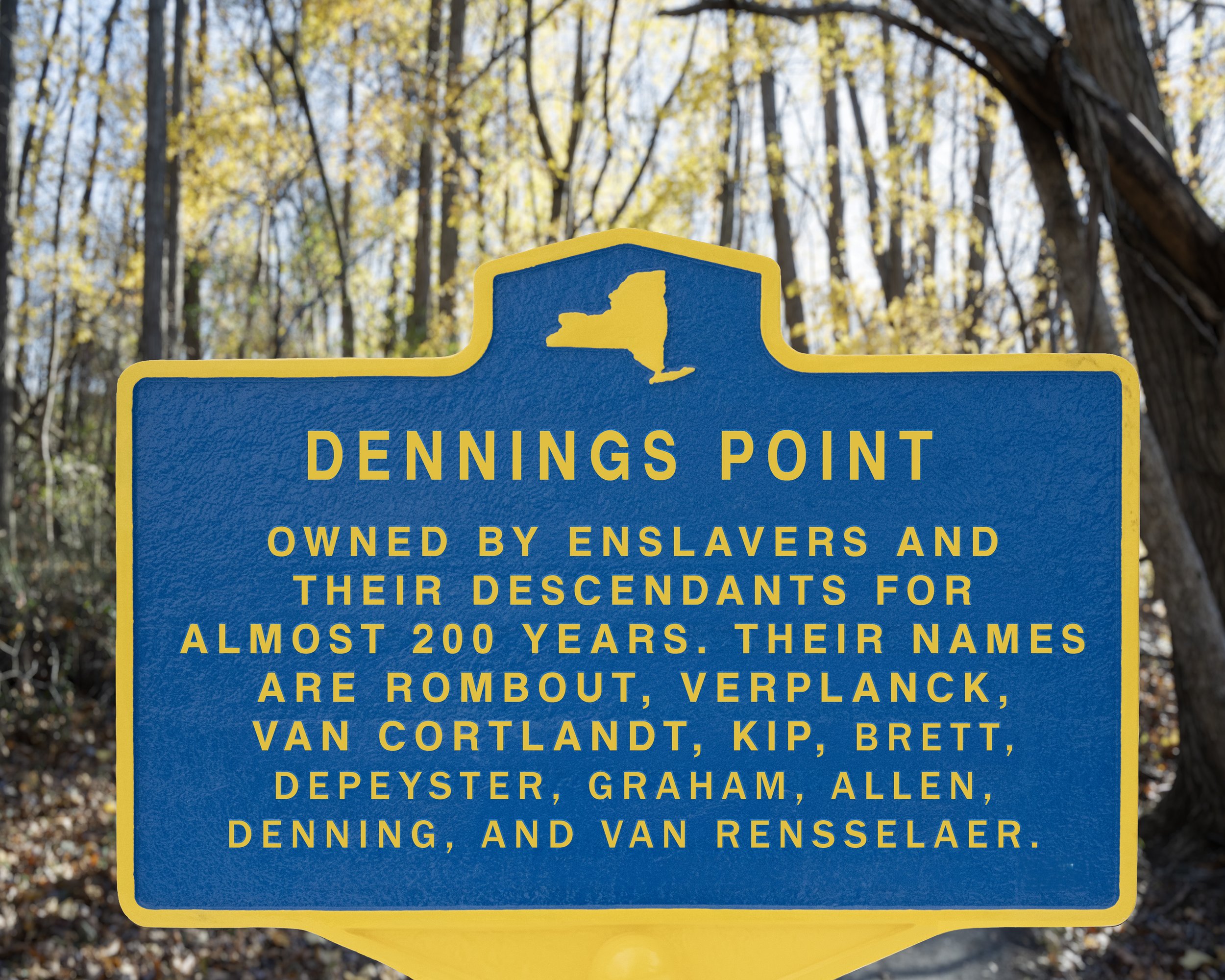
Dennings Point (study for a new historical marker), 2026, archival pigment print, 20 in. x 25 in.
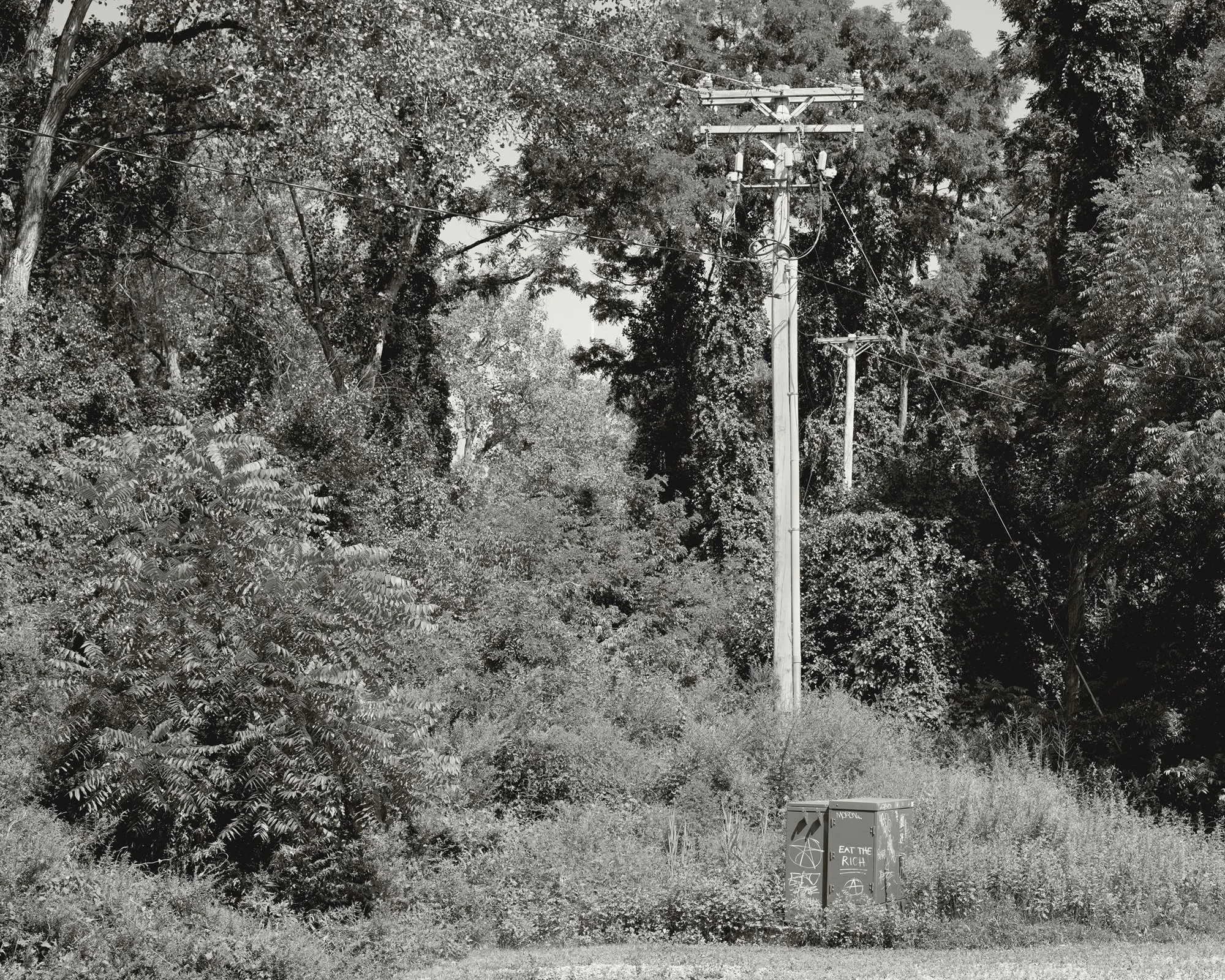
Eat the Rich, 2025, archival pigment print, 20 in. x 25 in.
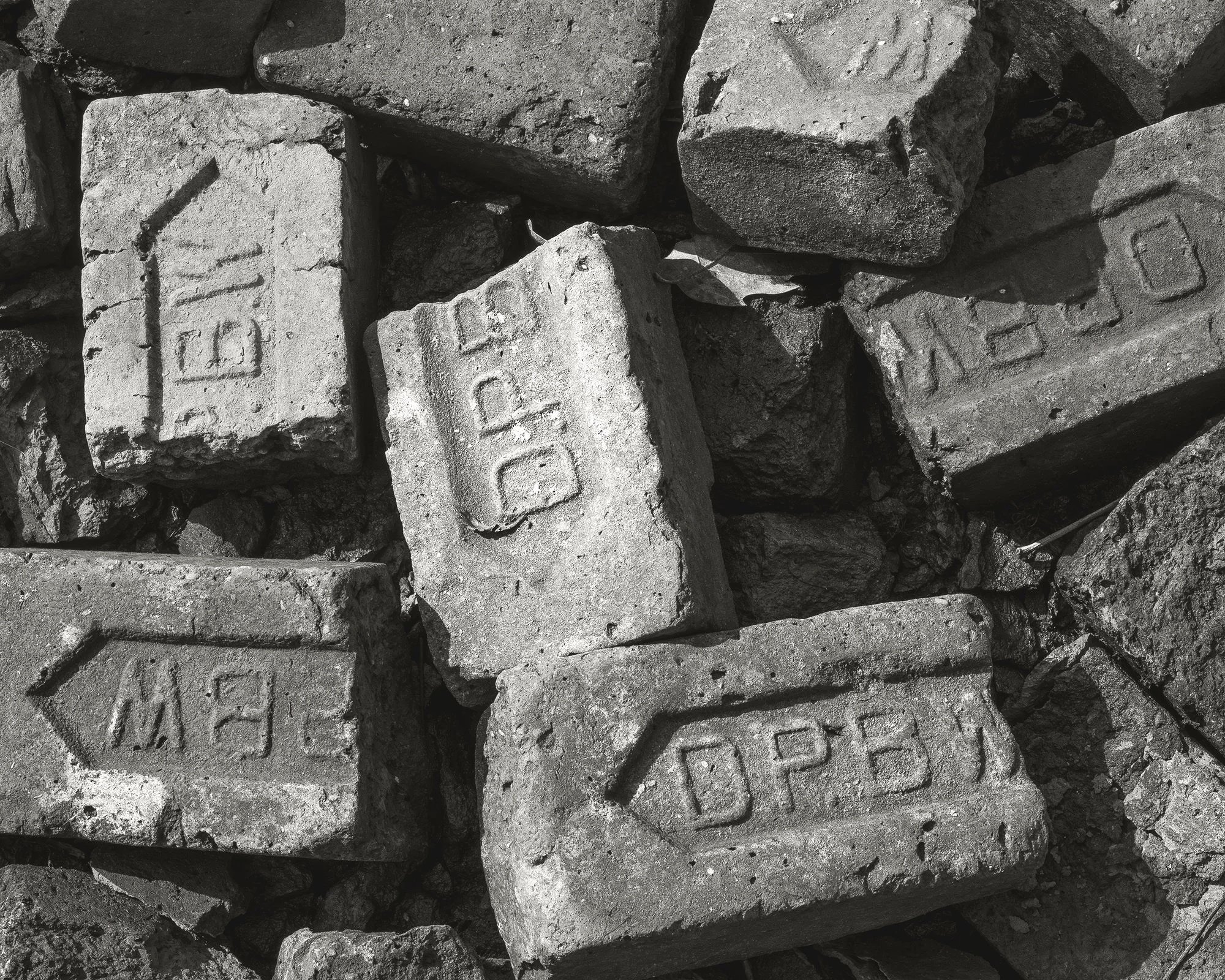
Brick Beach, 2026, archival pigment print, 20 in. x 25 in.
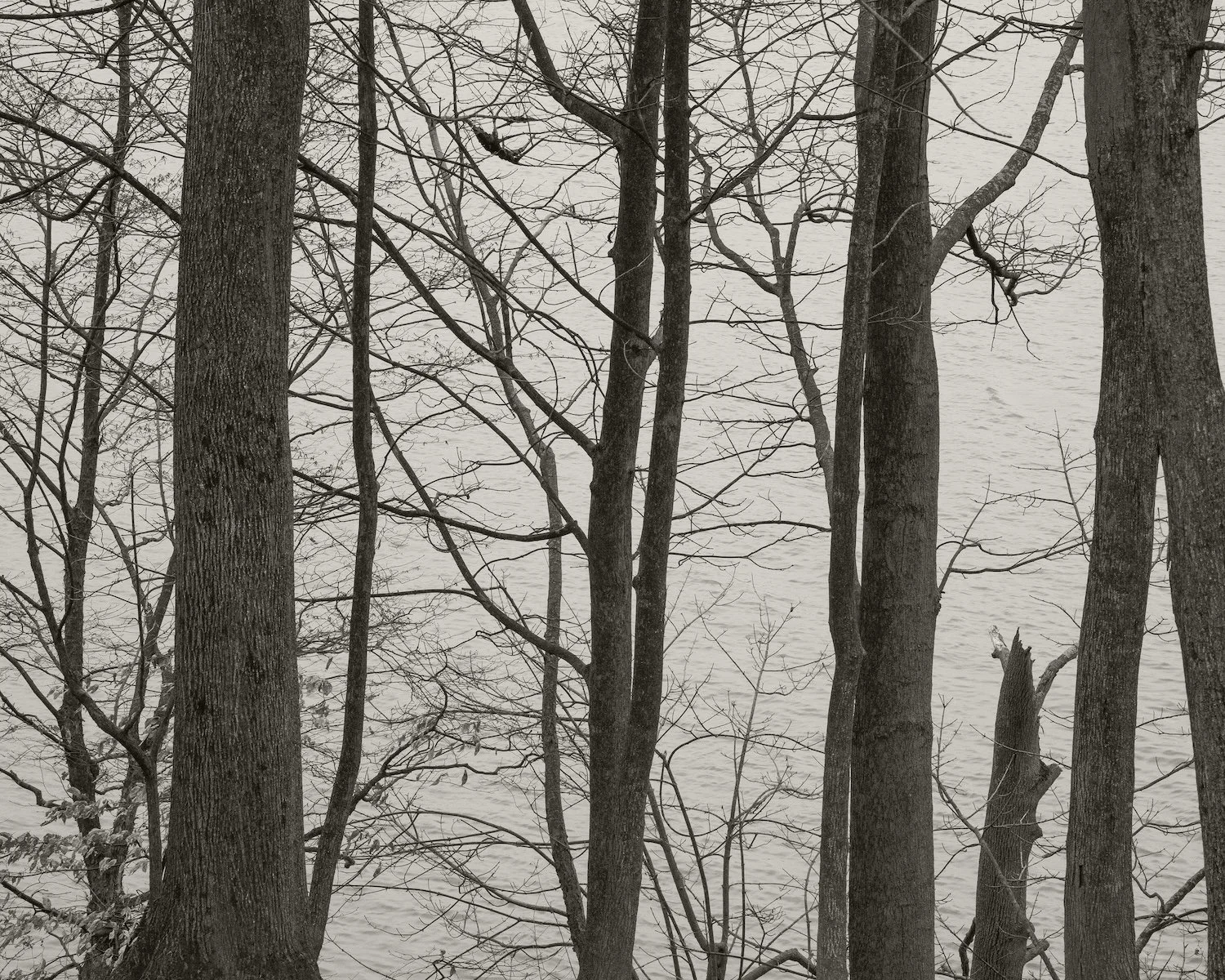
Tree Line, 2026, archival pigment print, 20 in. x 24 in.
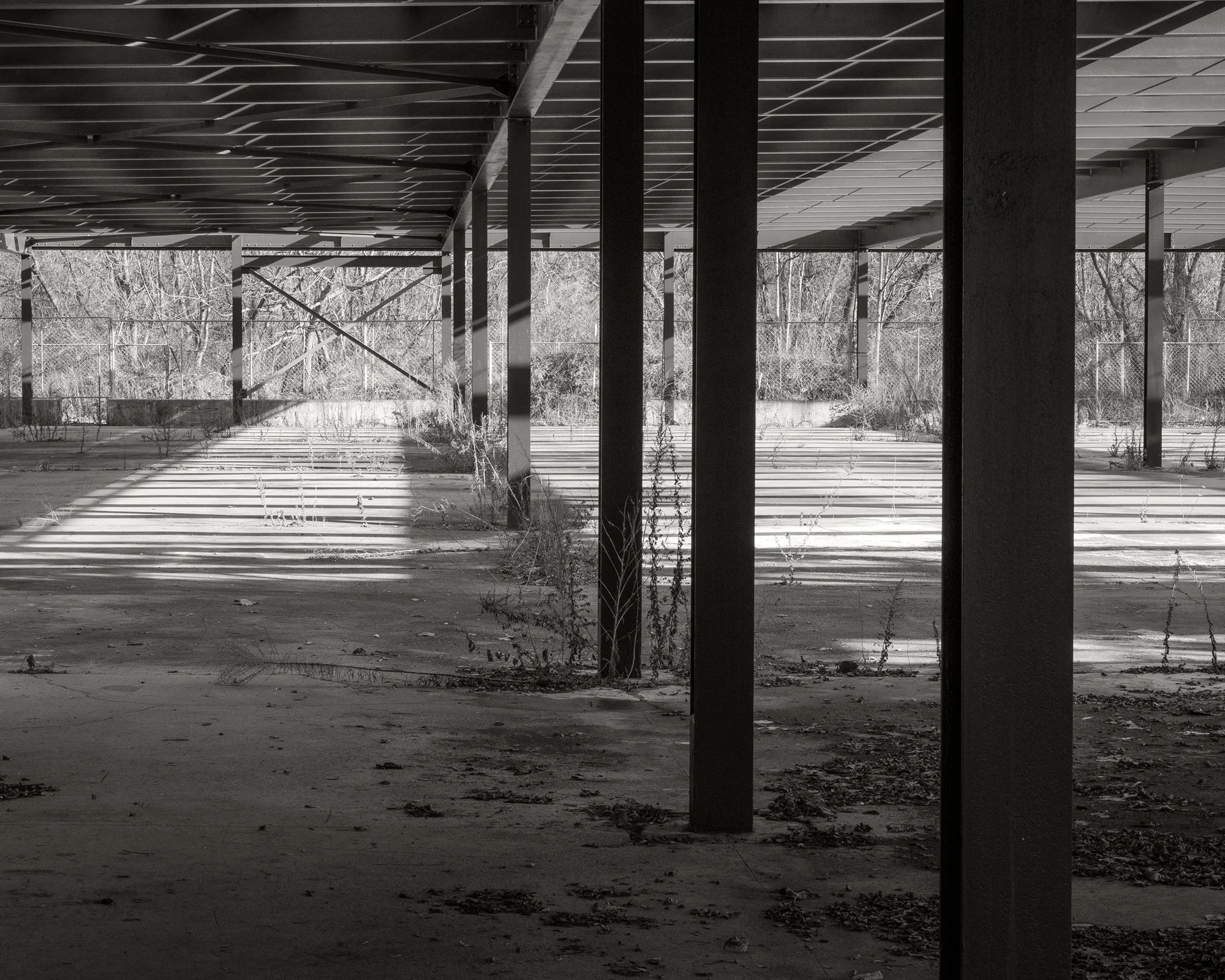
Factory Floor, 2026, archival pigment print, 20 in. x 25 in.
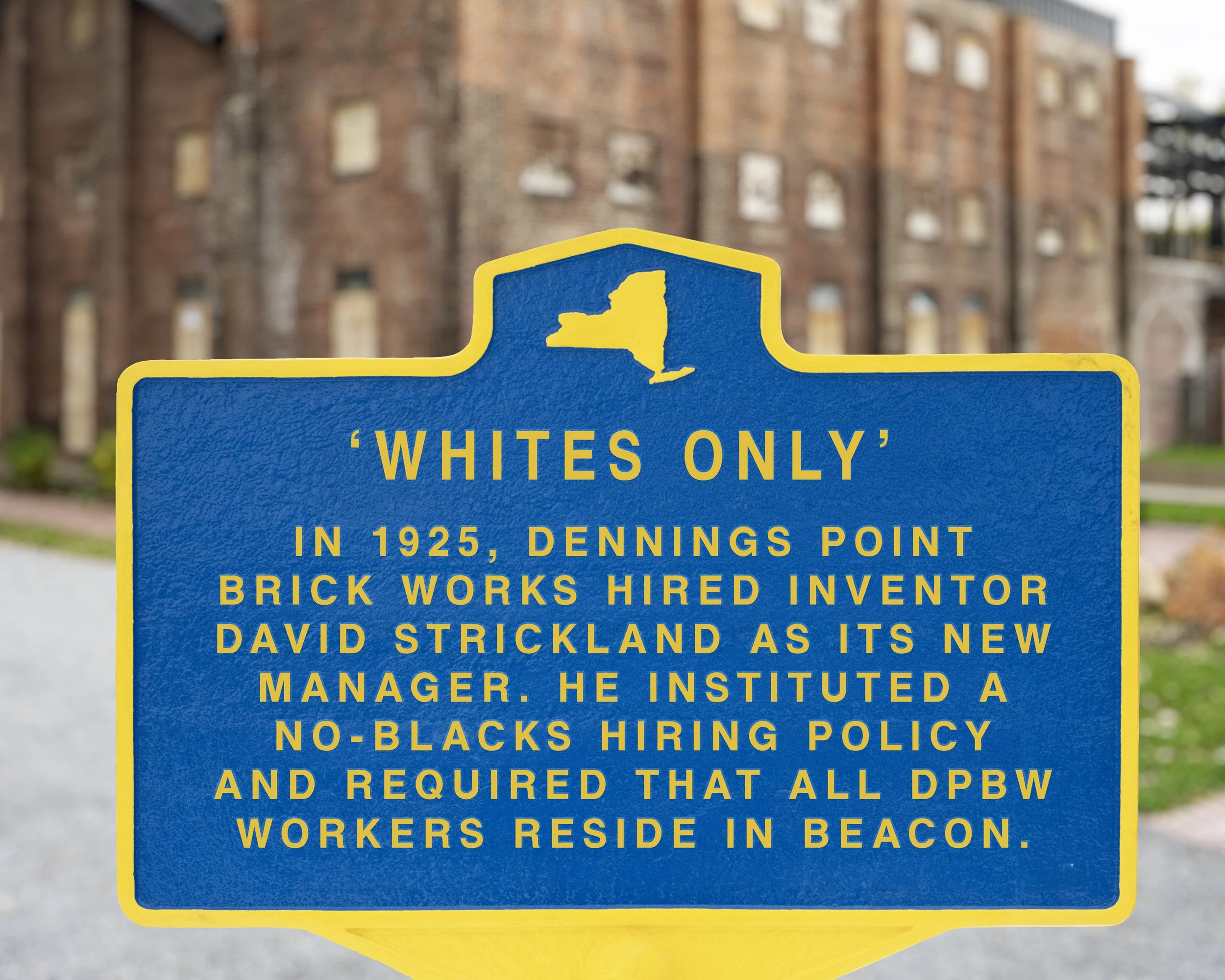
Whites Only (study for a new historical marker), 2026, archival pigment print, 20 in. x 25 in.
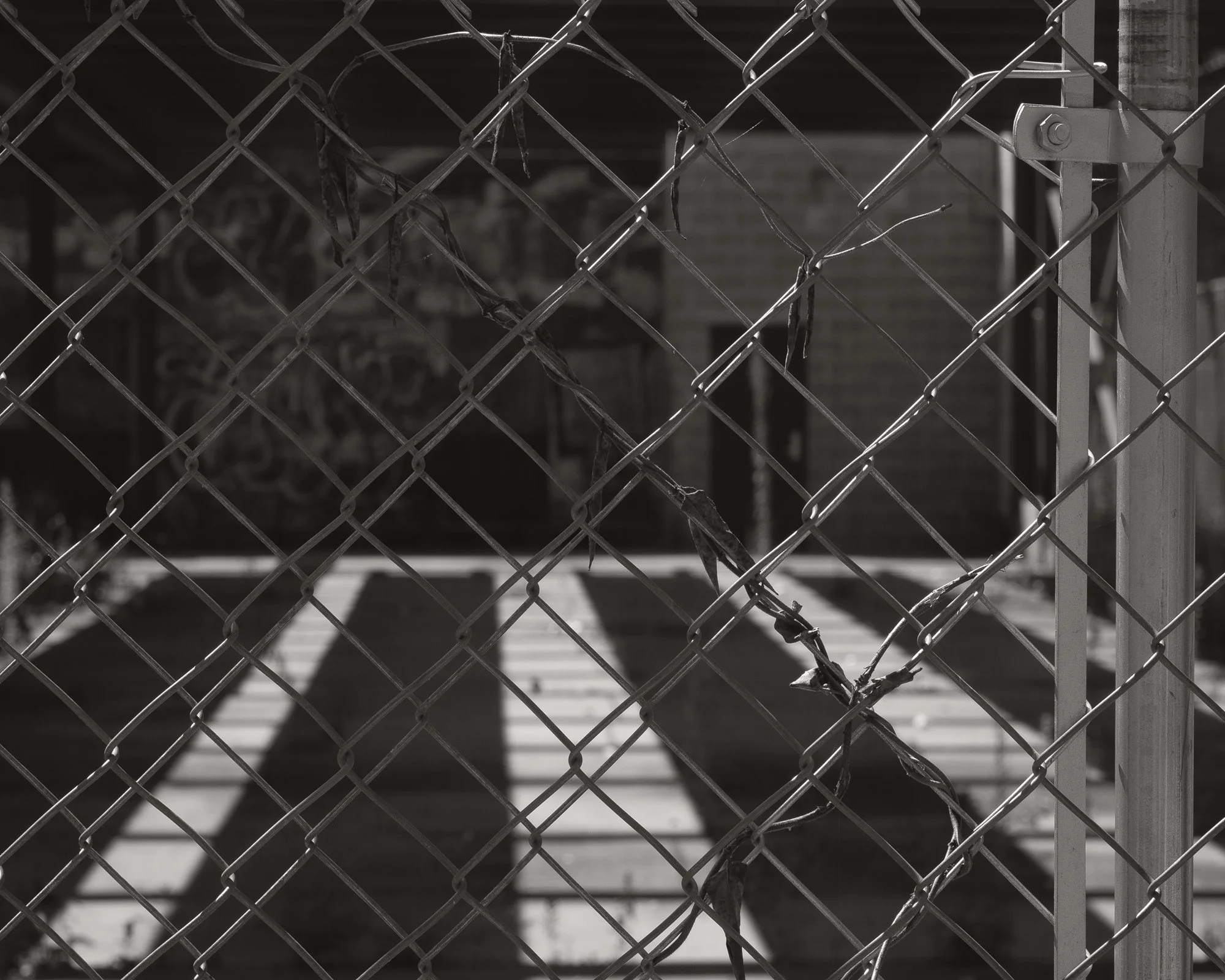
Chainlink, 2025, archival pigment print, 20 in. x 25 in.
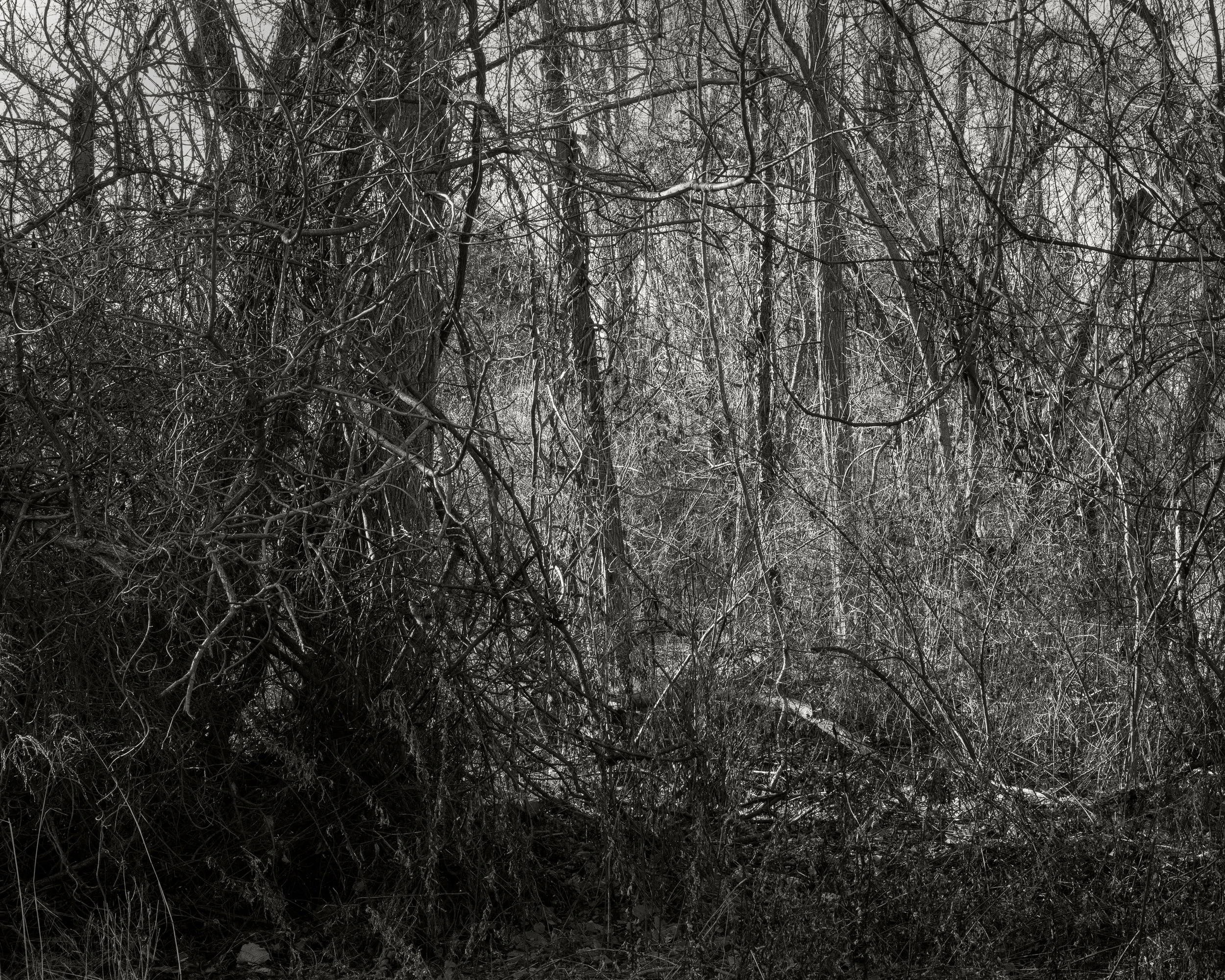
Overgrowth, 2025, archival pigment print, 20 in. x 25 in.
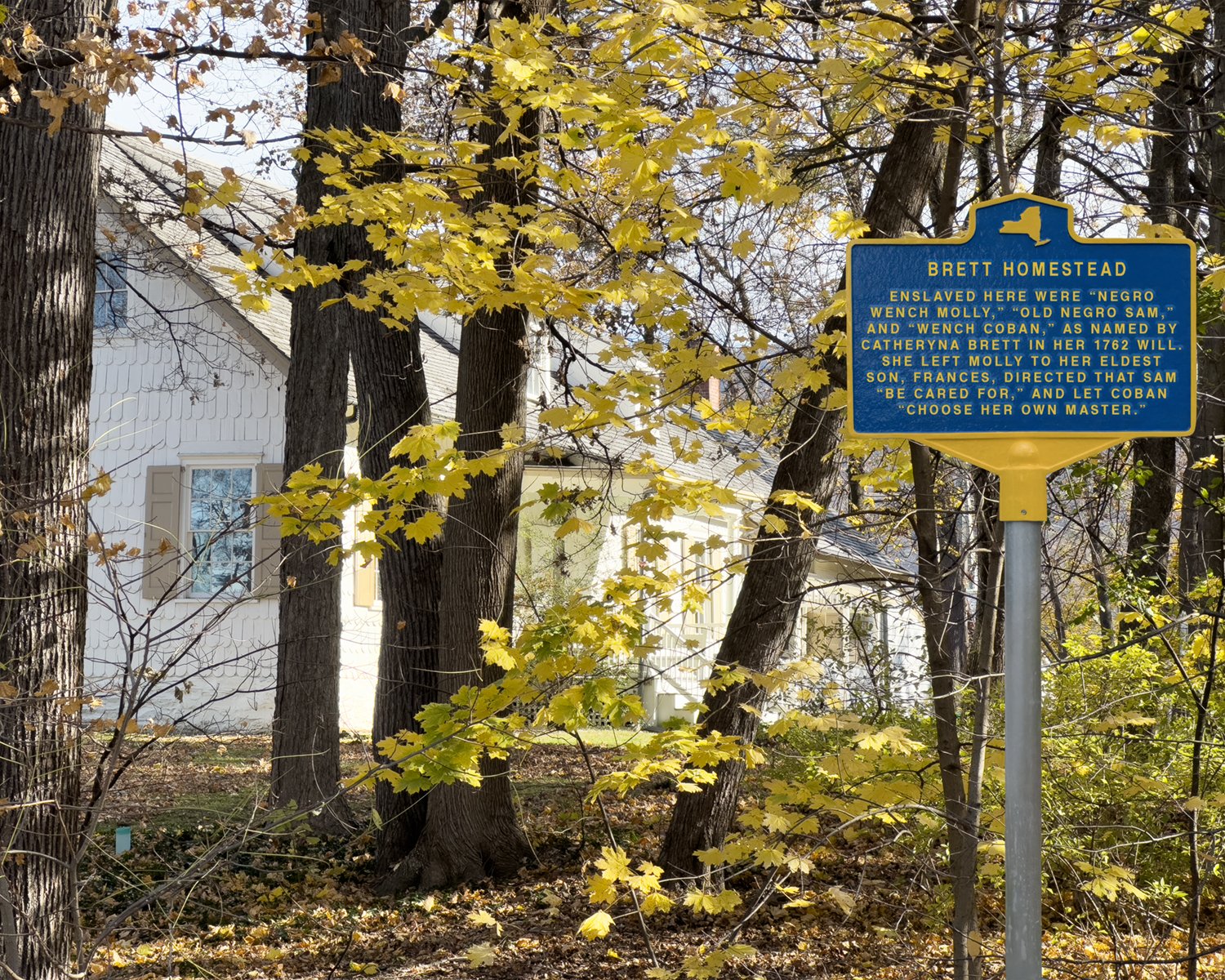
Brett Homestead, Beacon, NY (study for a new historical marker), 2026, archival pigment print, 20 in x 24 in.
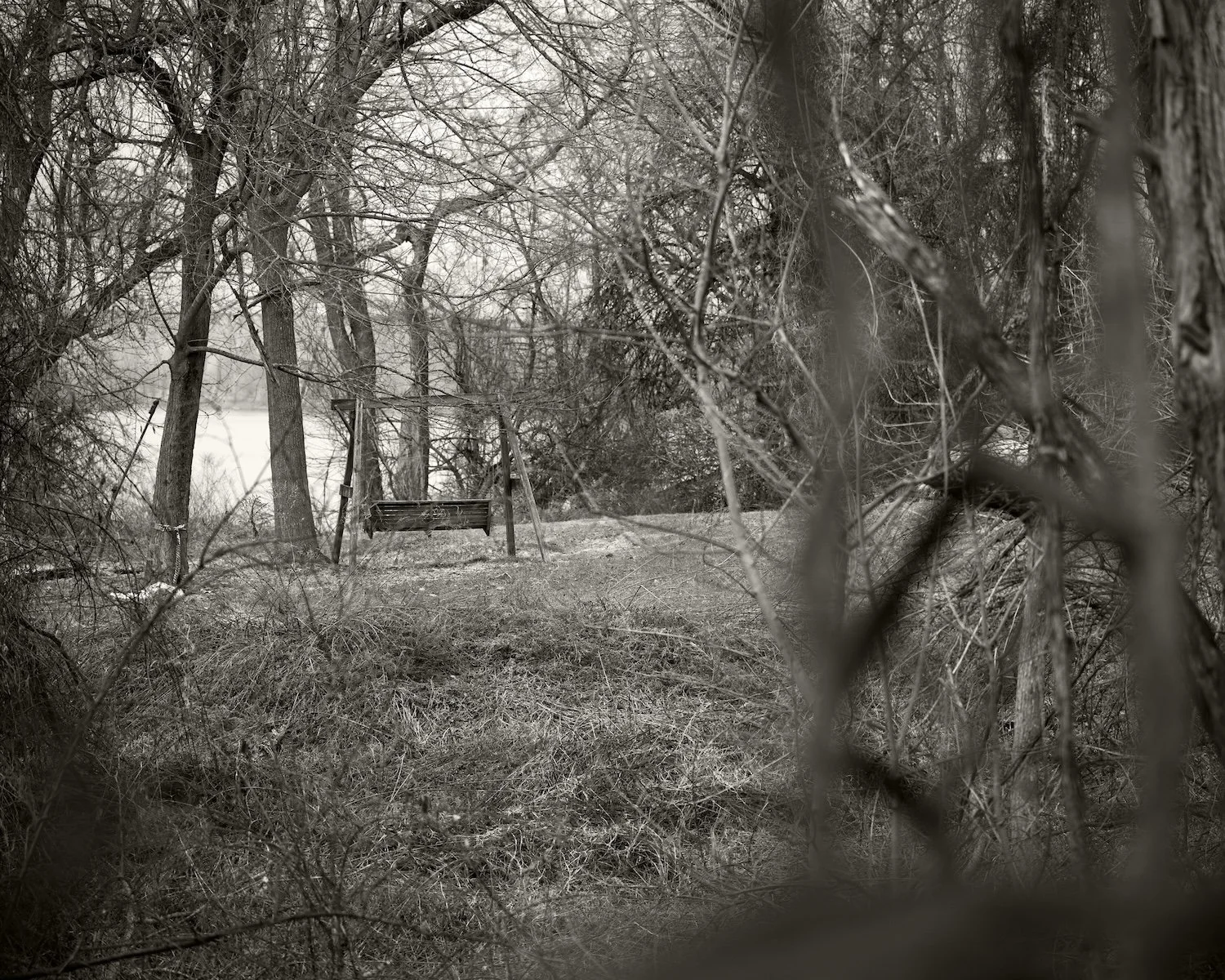
Glider, 2026, archival pigment print, 20 in. x 24 in.
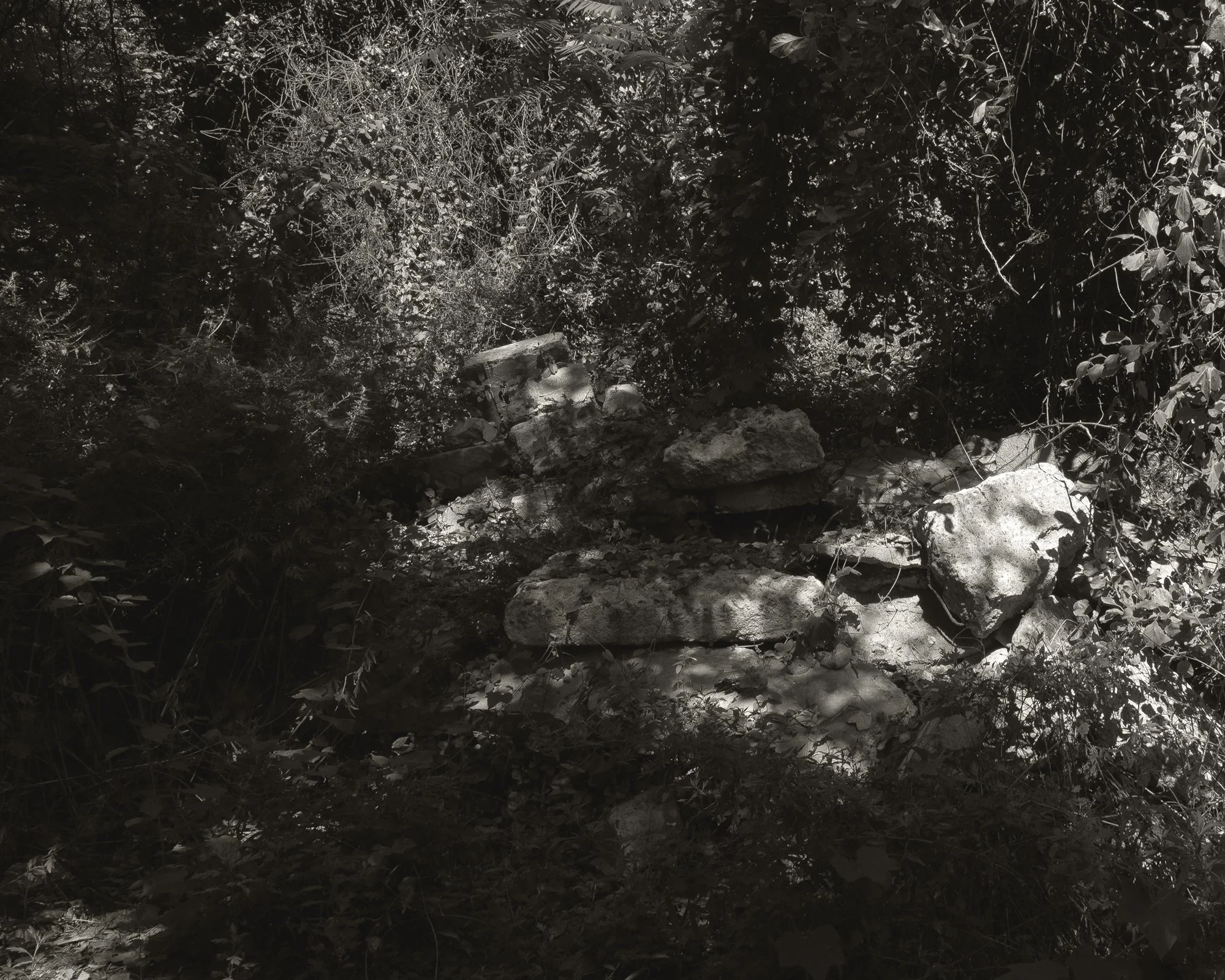
Unmarked Rubble, 2025, archival pigment print, 20 in. x 25 in.
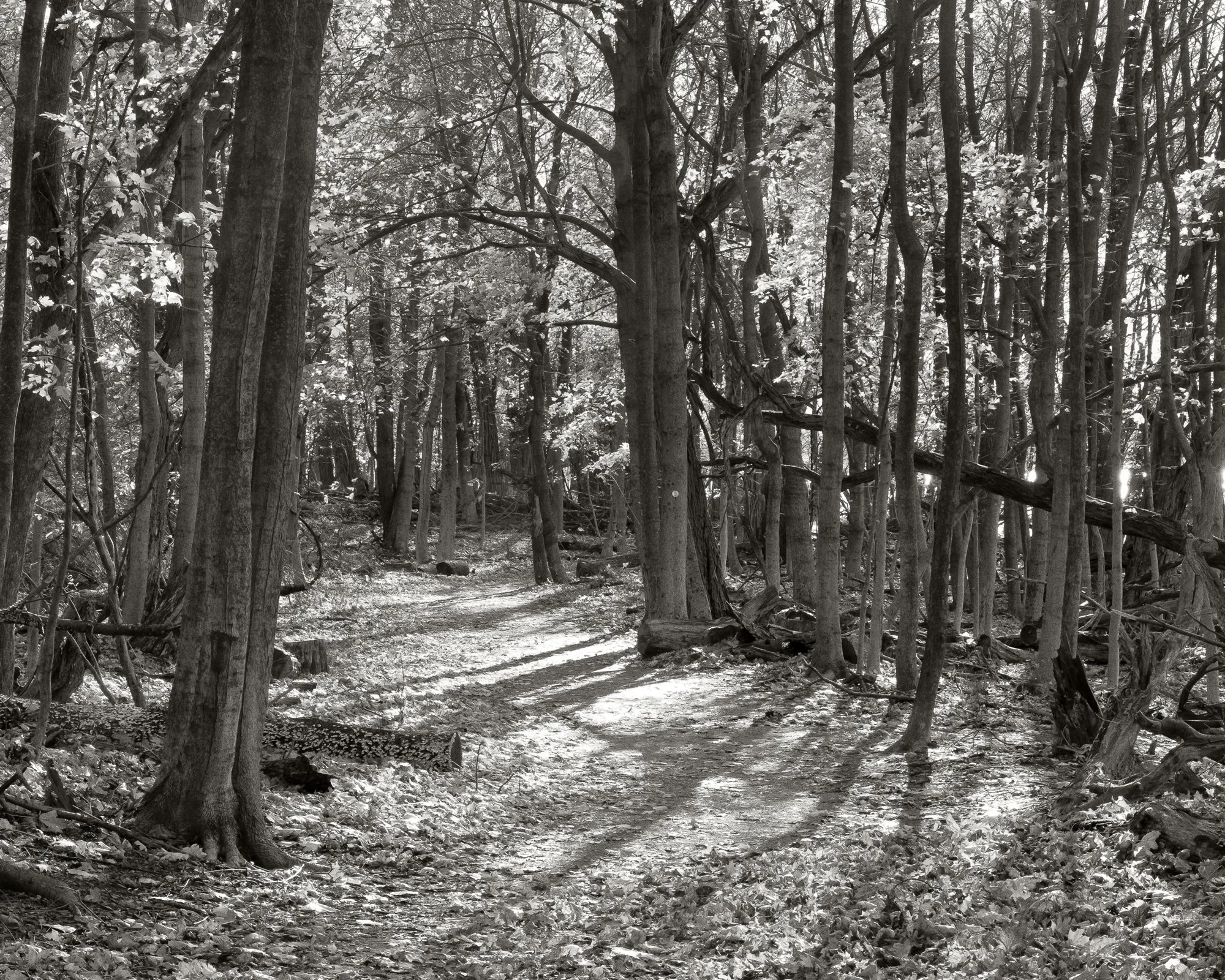
Trail, 2025, archival pigment print, 20 in. x 25 in.
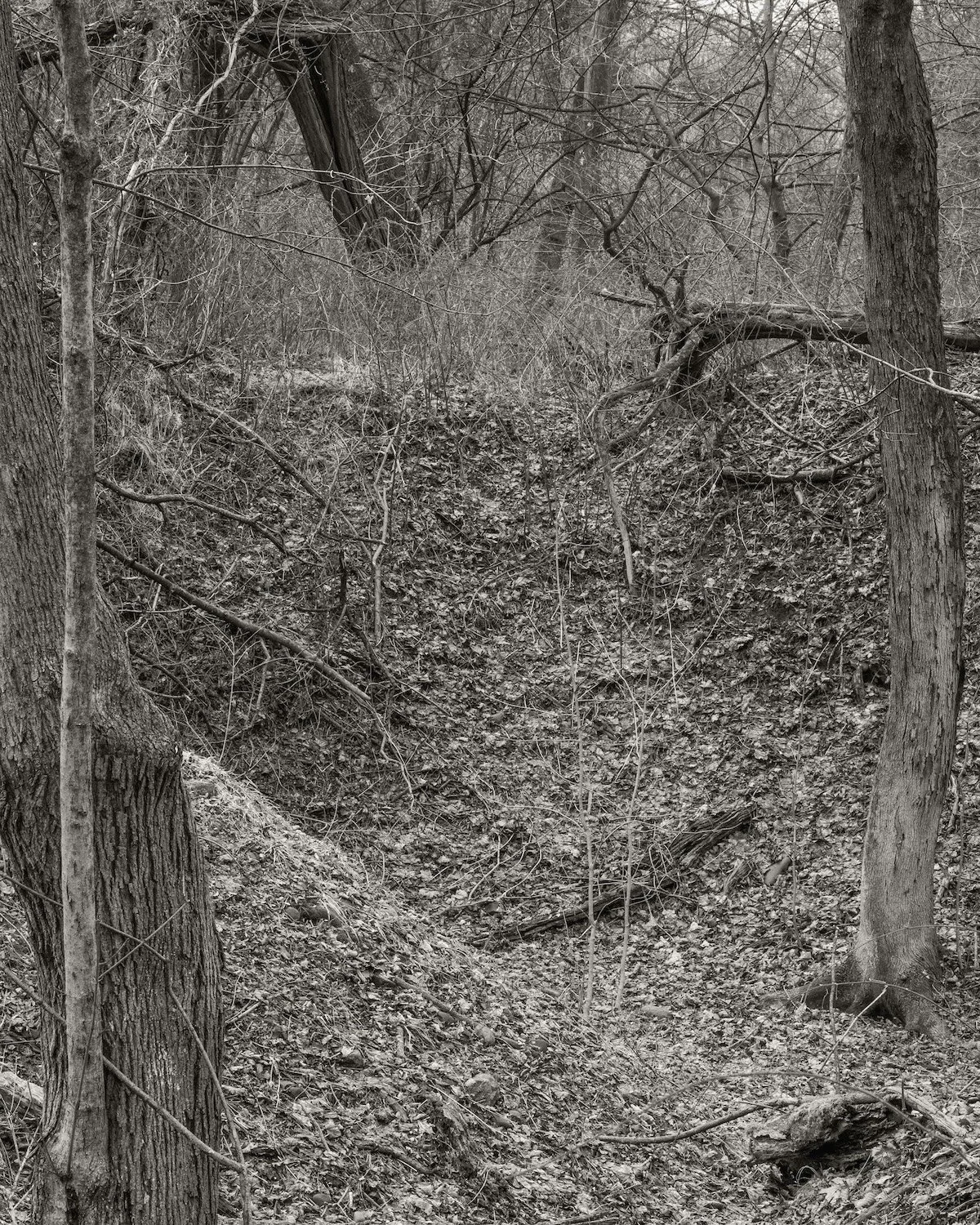
Mound, 2026, archival pigment print, 20 in. x 24 in.
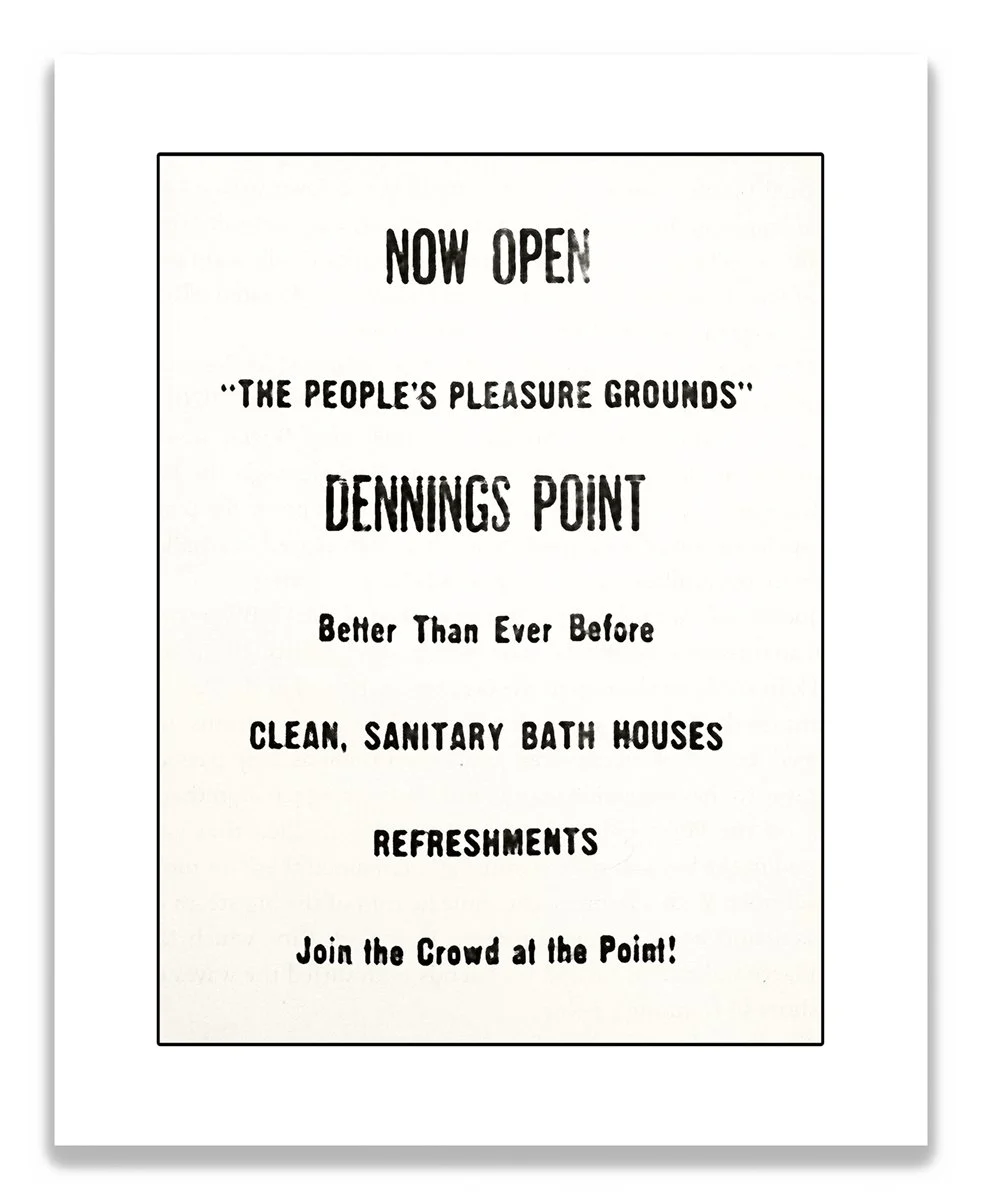
The People's Pleasure Grounds, 2026, inkjet print on archival paper mounted on wood panel, 10 in x 8 in.
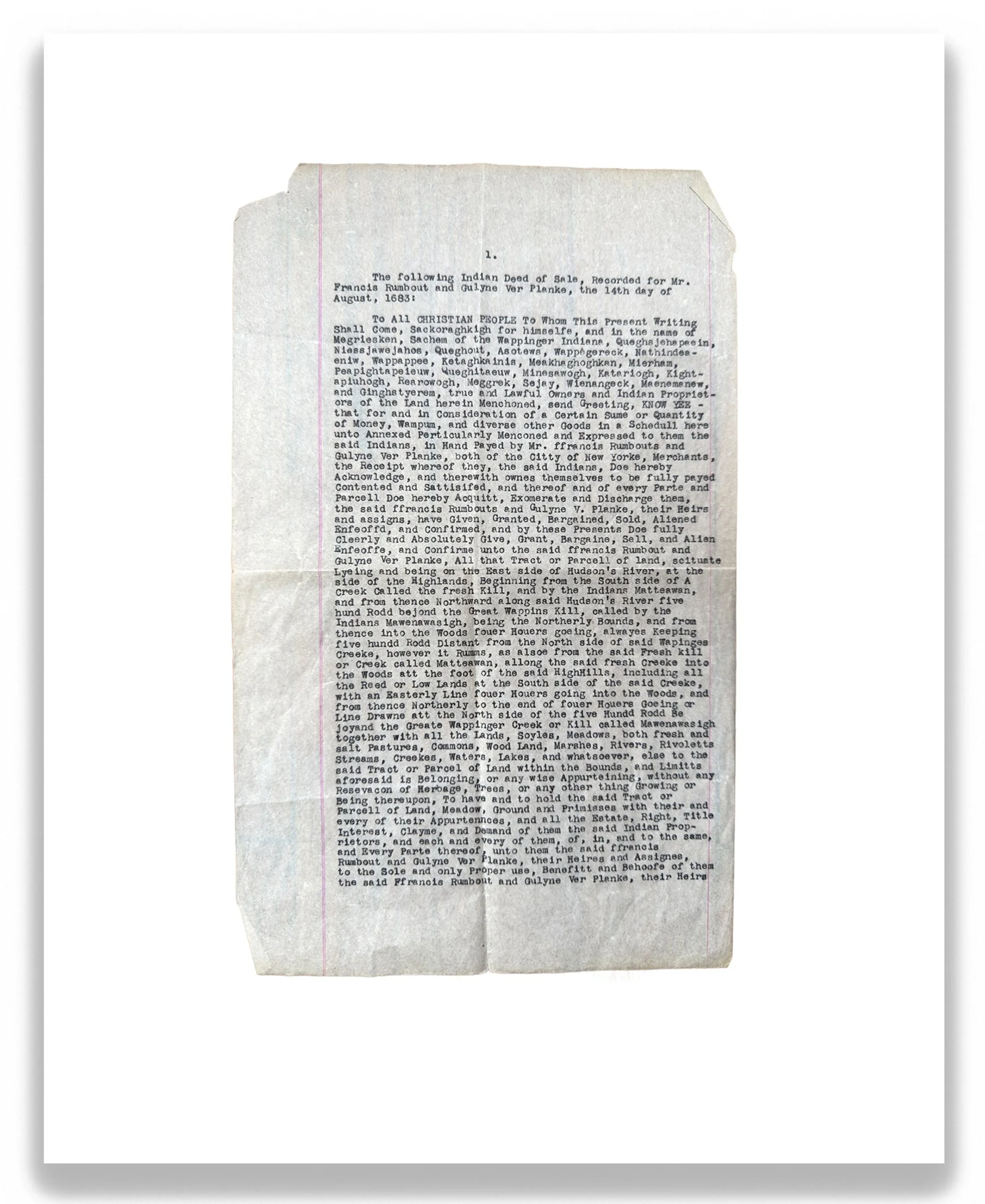
Transcript of the Rombout Patent, Page One, 2026, inkjet print on archival paper mounted on wood panel, 10 in x 8 in.
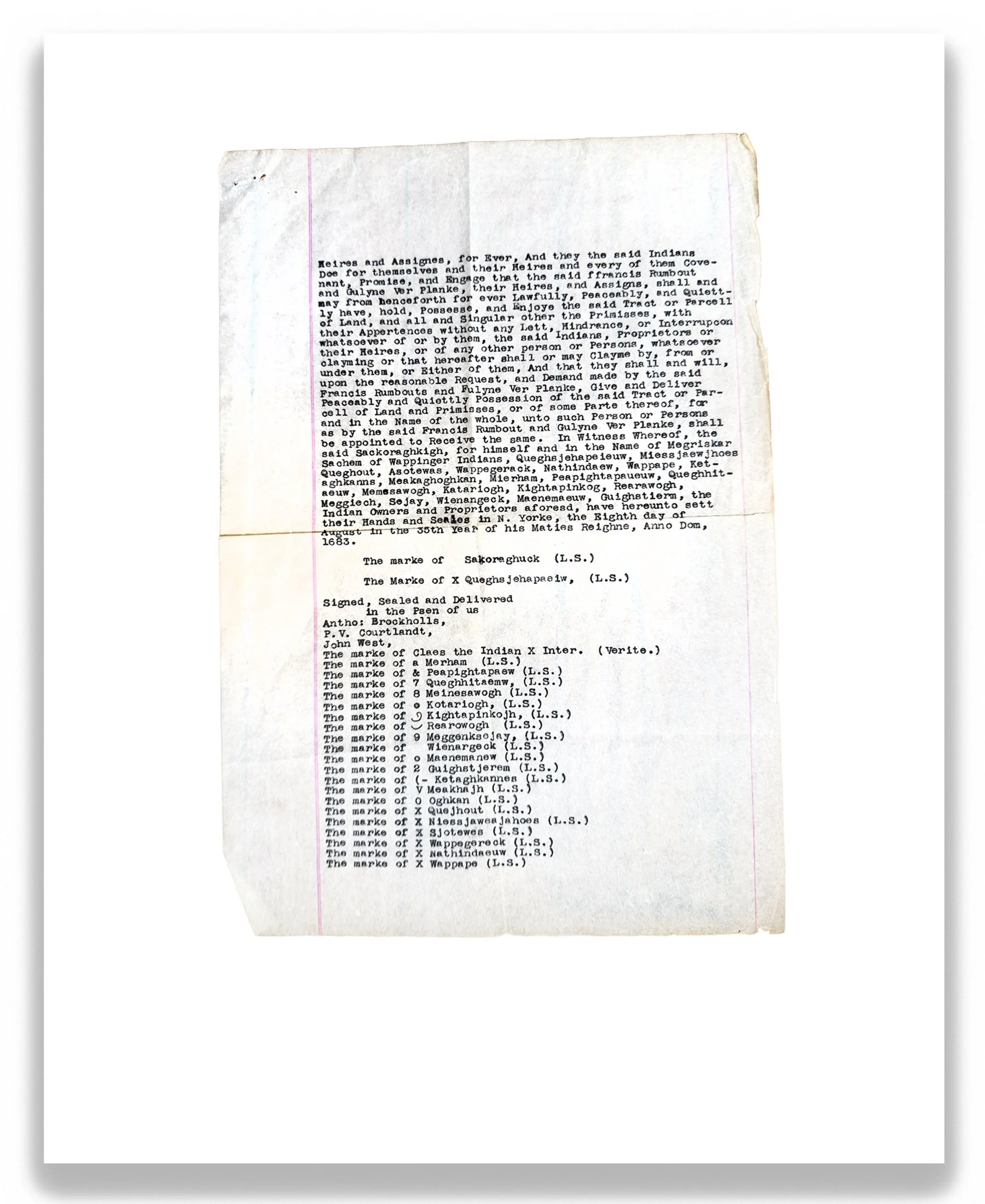
Transcript of the Rombout Patent, Page Two, 2026, inkjet print on archival paper mounted on wood panel, 10 in x 8 in.
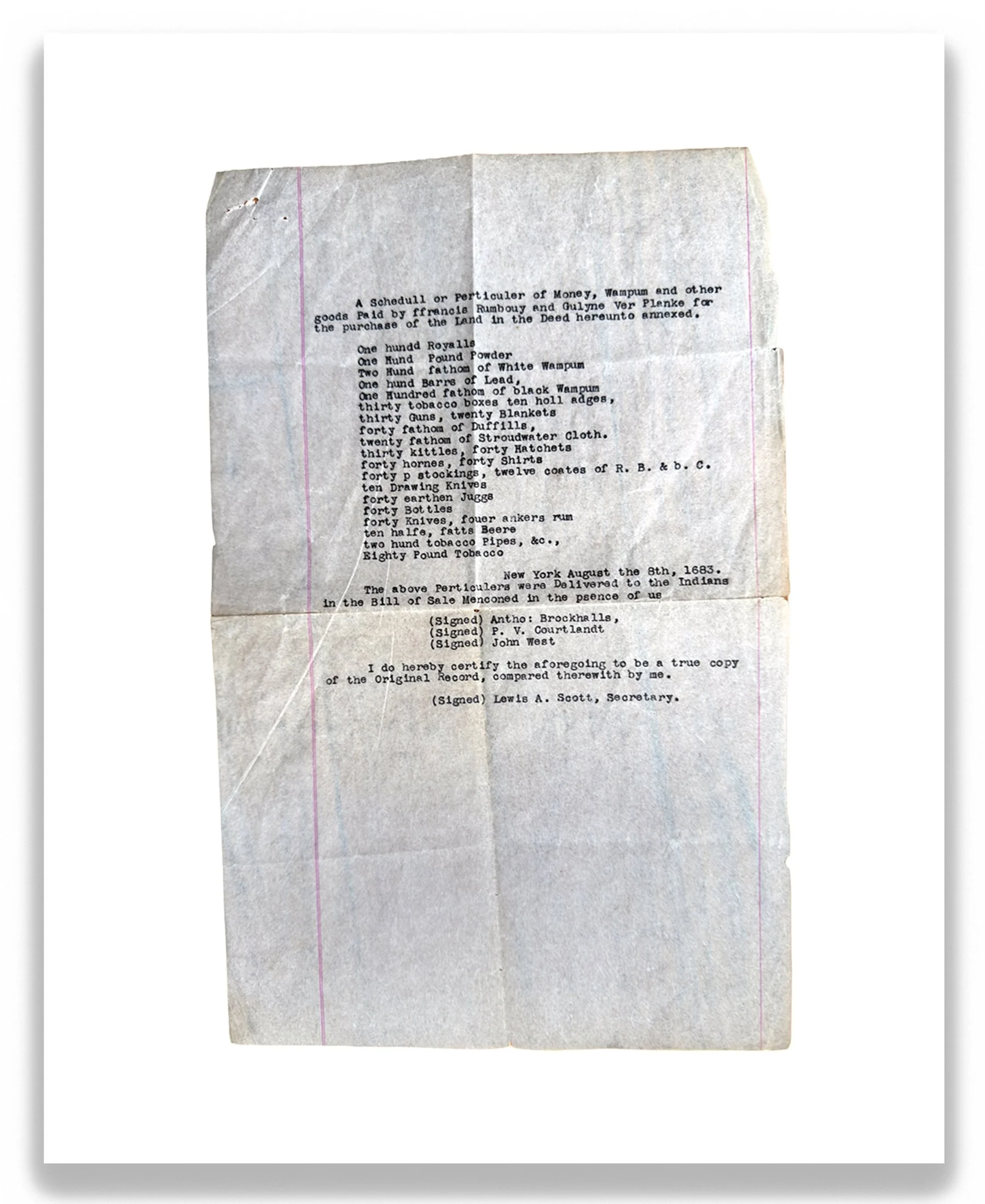
Transcript of the Rombout Patent, Page Three, 2026, inkjet print on archival paper mounted on wood panel, 10 in x 8 in.
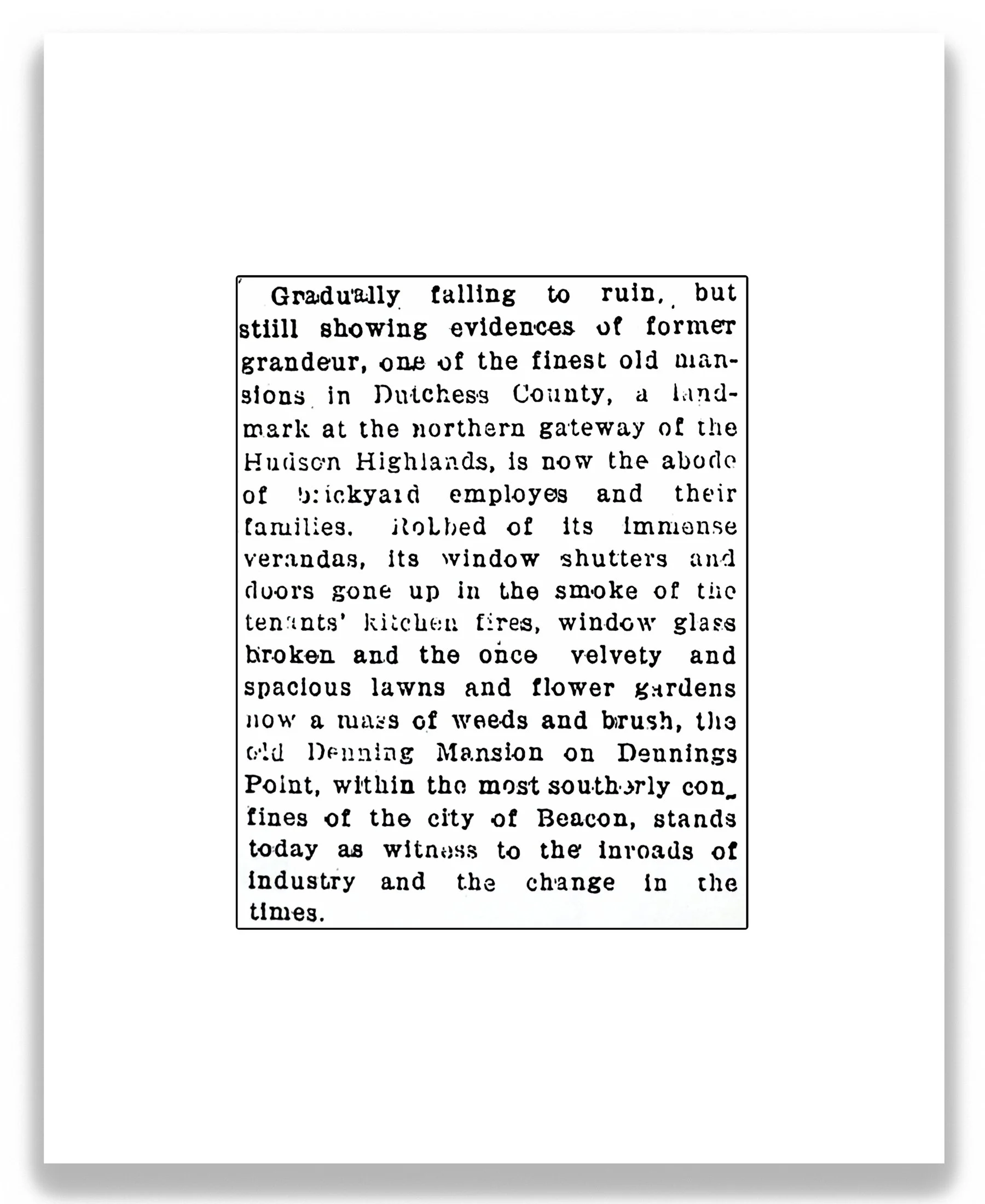
Gradually Falling to Ruin, 2026, inkjet print on archival paper mounted on wood panel, 10 in x 8 in.
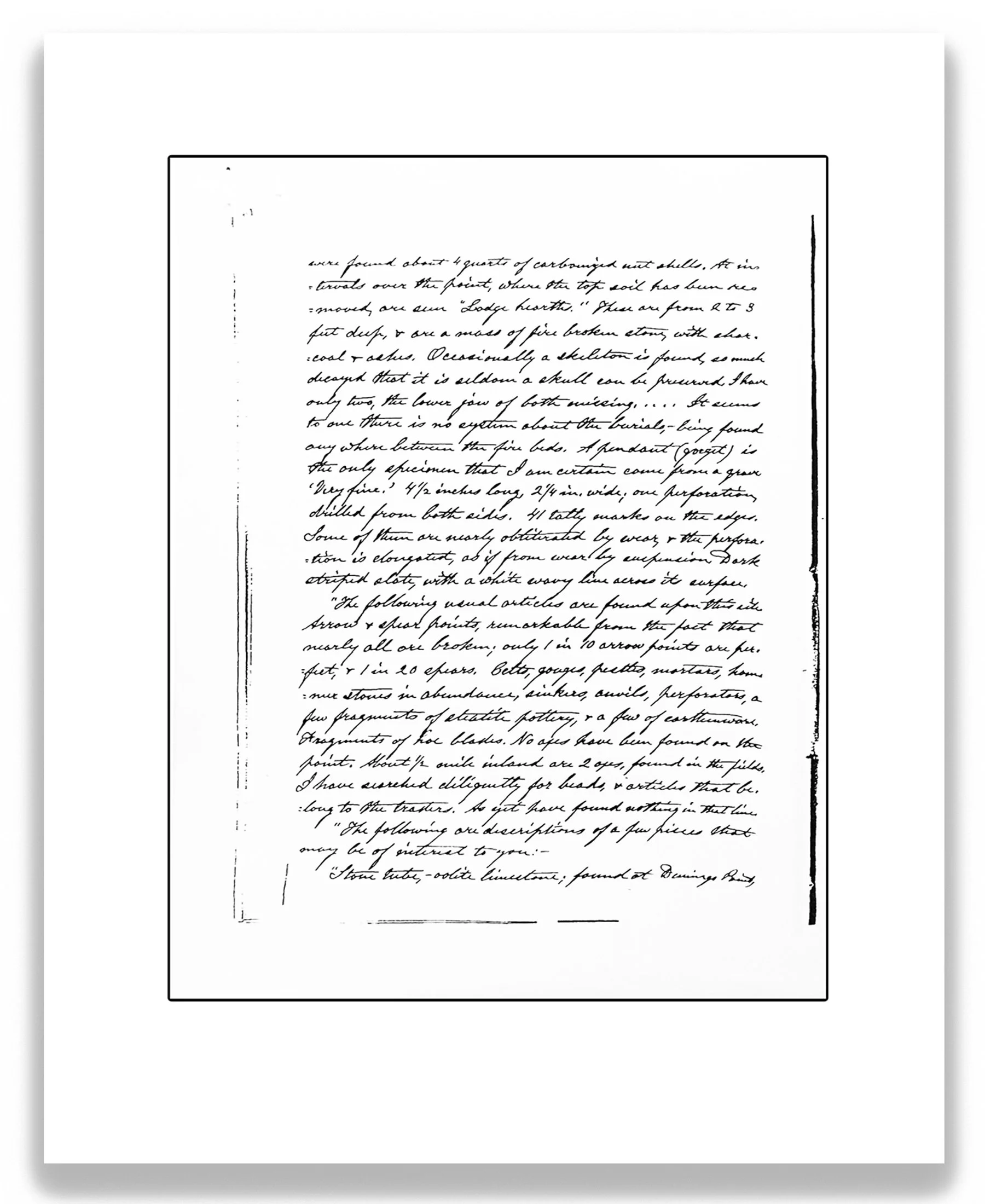
Occasionally a Skeleton Is Found, 2026, inkjet print on archival paper mounted on wood panel, 10 in x 8 in.
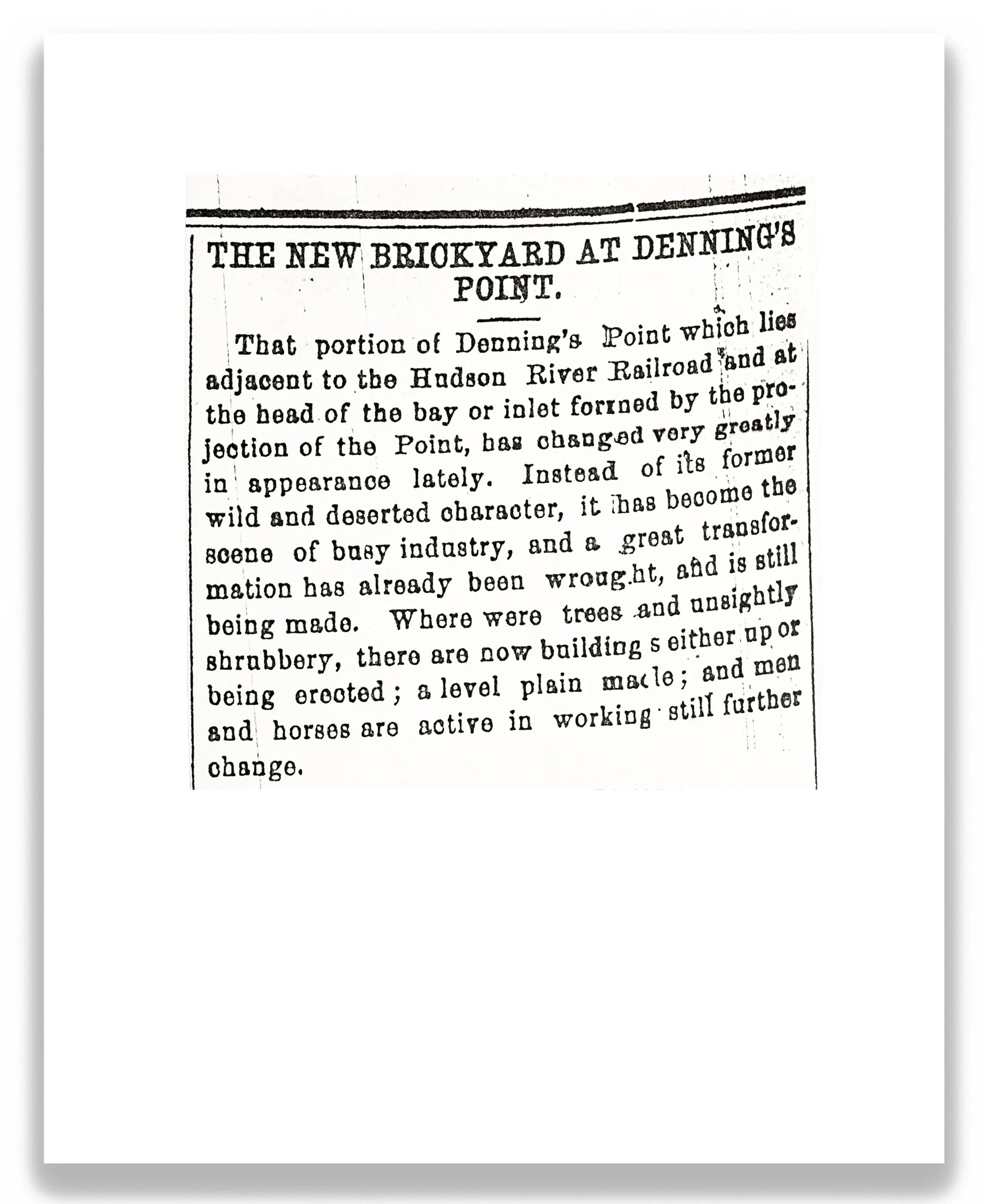
The New Brickyard at Denning's Point, 2026, inkjet print on archival paper mounted on wood panel, 10 in x 8 in.
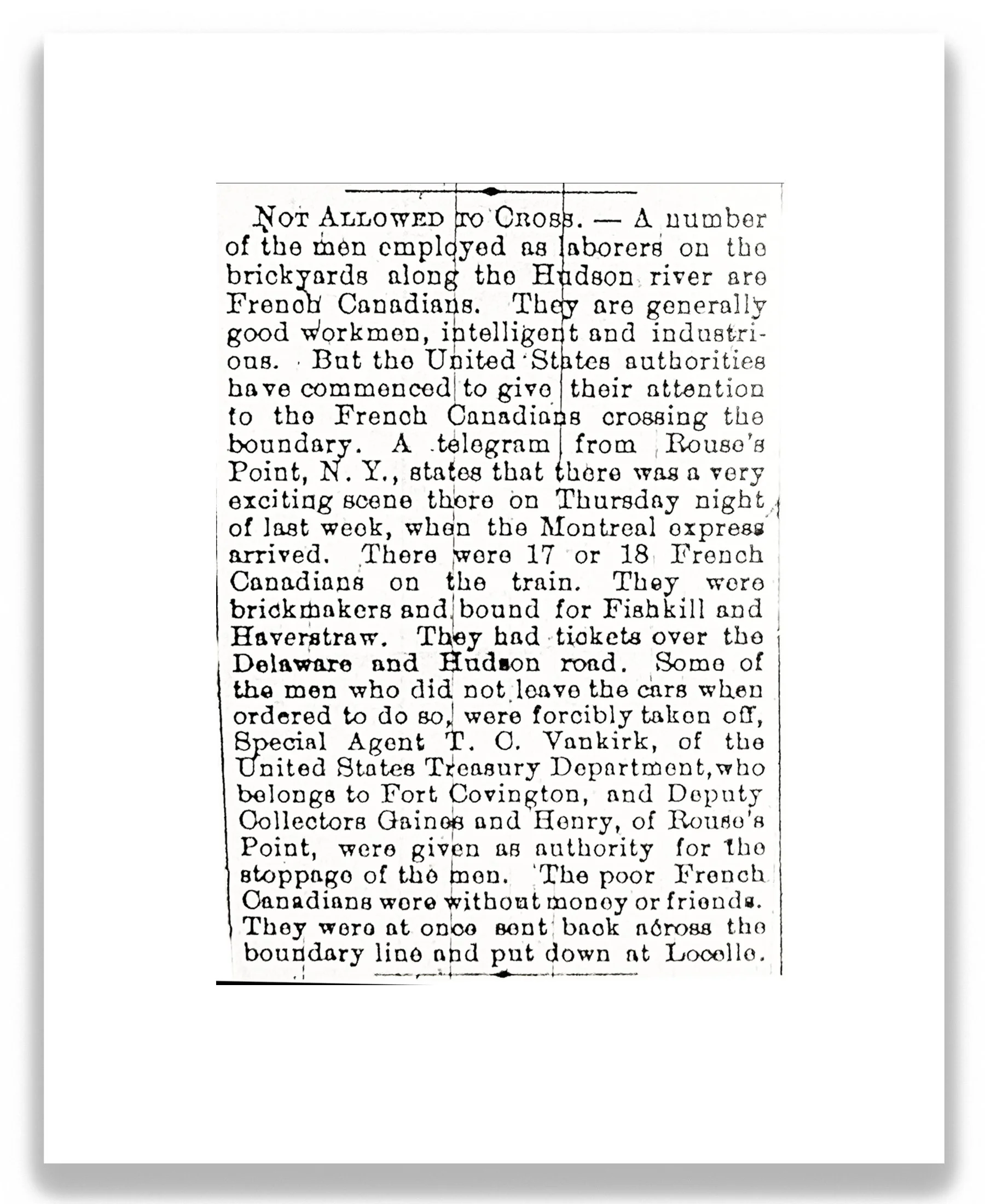
Not Allowed to Cross, 2026, inkjet print on archival paper mounted on wood panel, 10 in x 8 in.
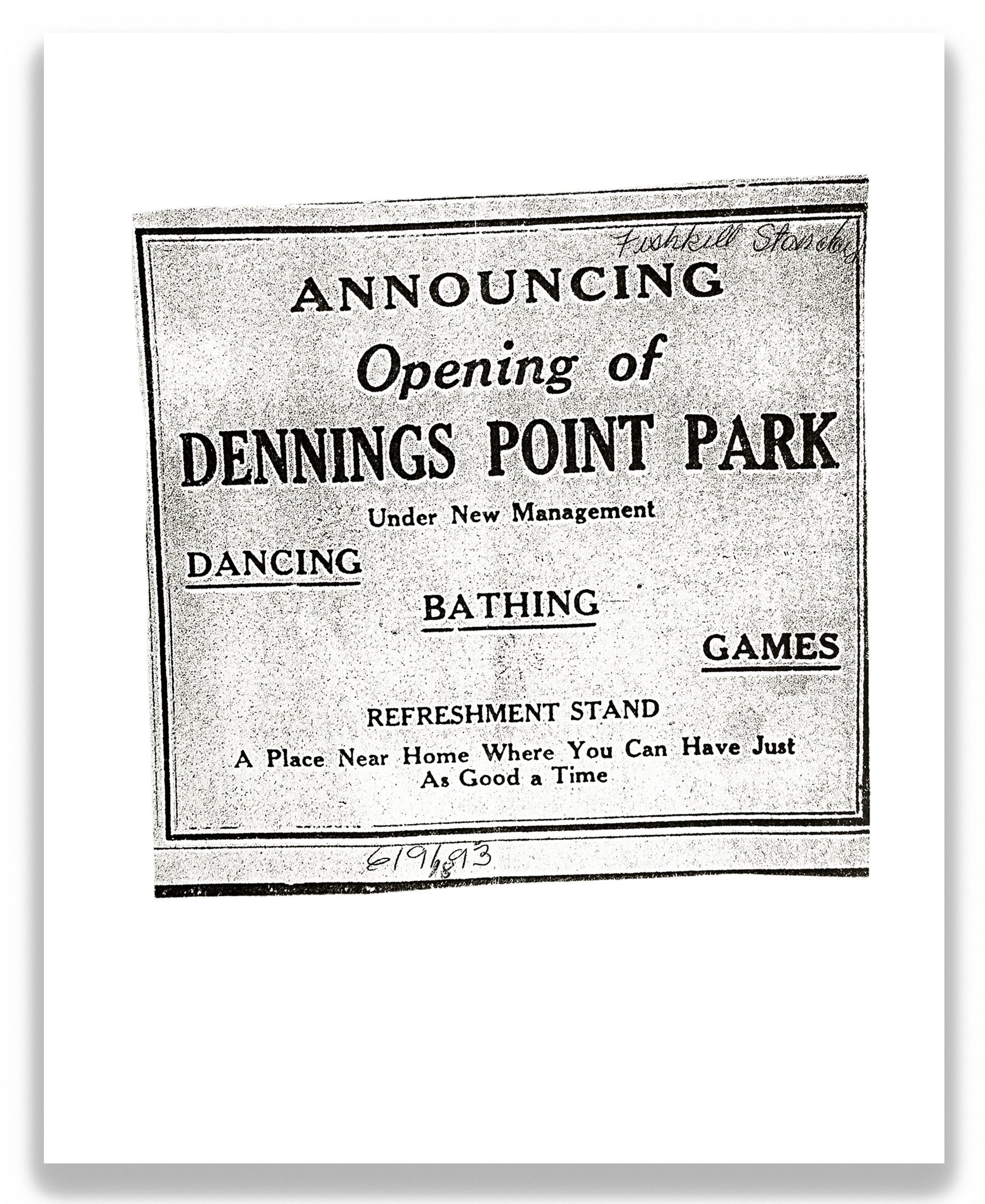
Opening of Dennings Point Park, 2026, inkjet print on archival paper mounted on wood panel, 10 in x 8 in.
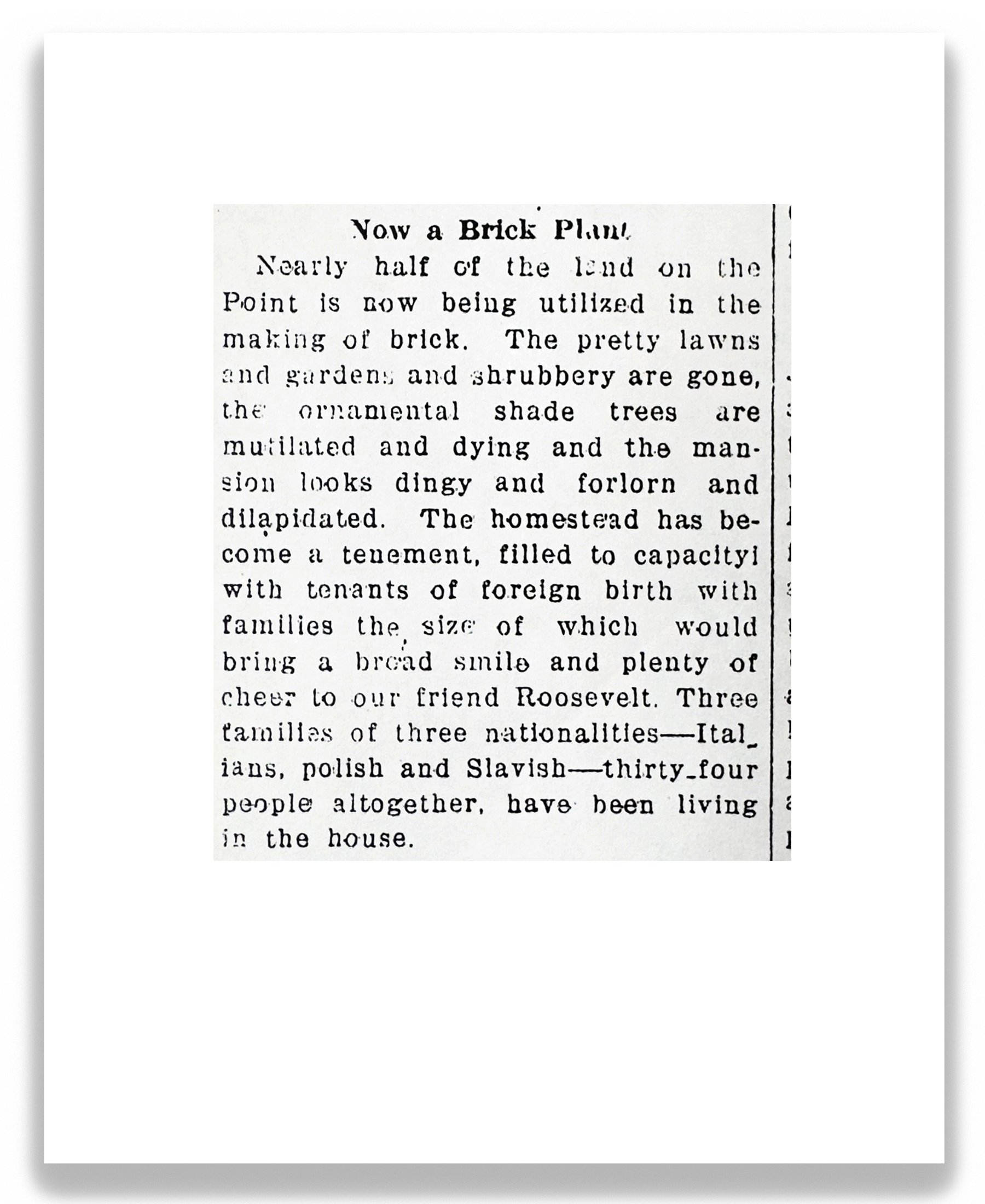
Now a Brick Plant, 2026, inkjet print on archival paper mounted on wood panel, 10 in x 8 in.
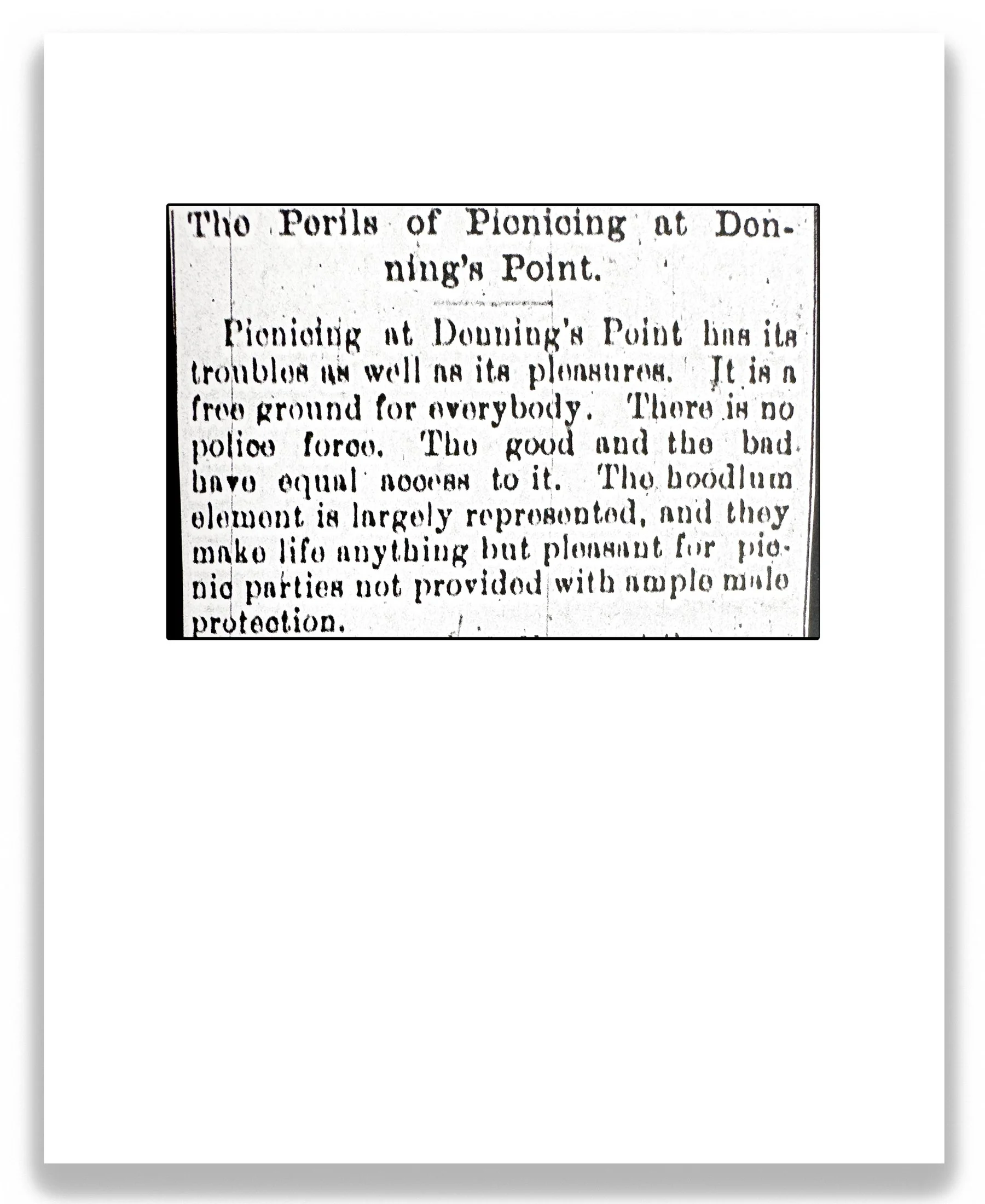
The Perils of Picnicking at Denning's Point, 2026, inkjet print on archival paper mounted on wood panel, 10 in x 8 in.
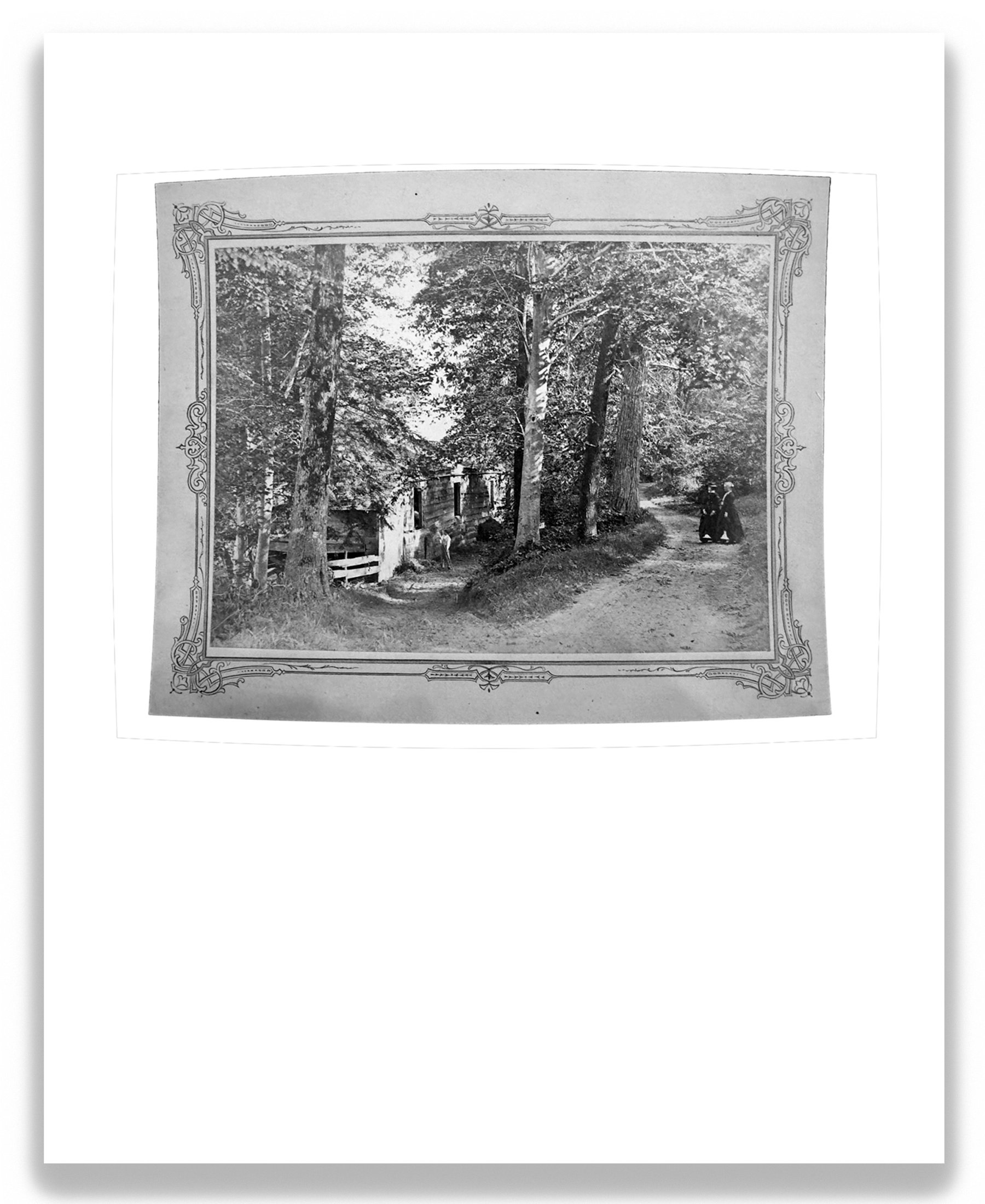
Working at Presqu'ile (recto), 2026, inkjet print on archival paper mounted on wood panel, 10 in x 8 in.
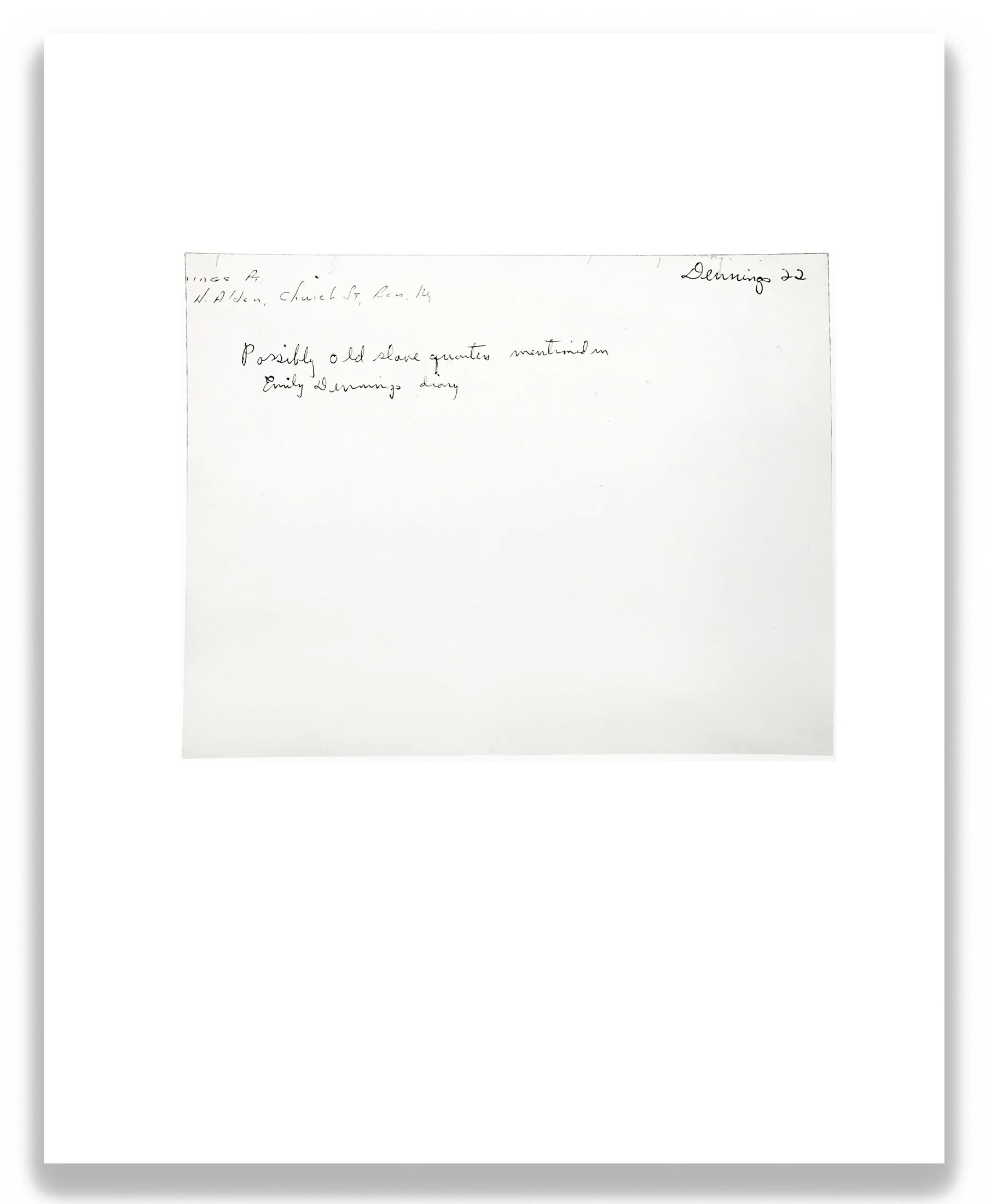
Working at Presqu'ile (verso), 2026, inkjet print on archival paper mounted on wood panel, 10 in x 8 in.
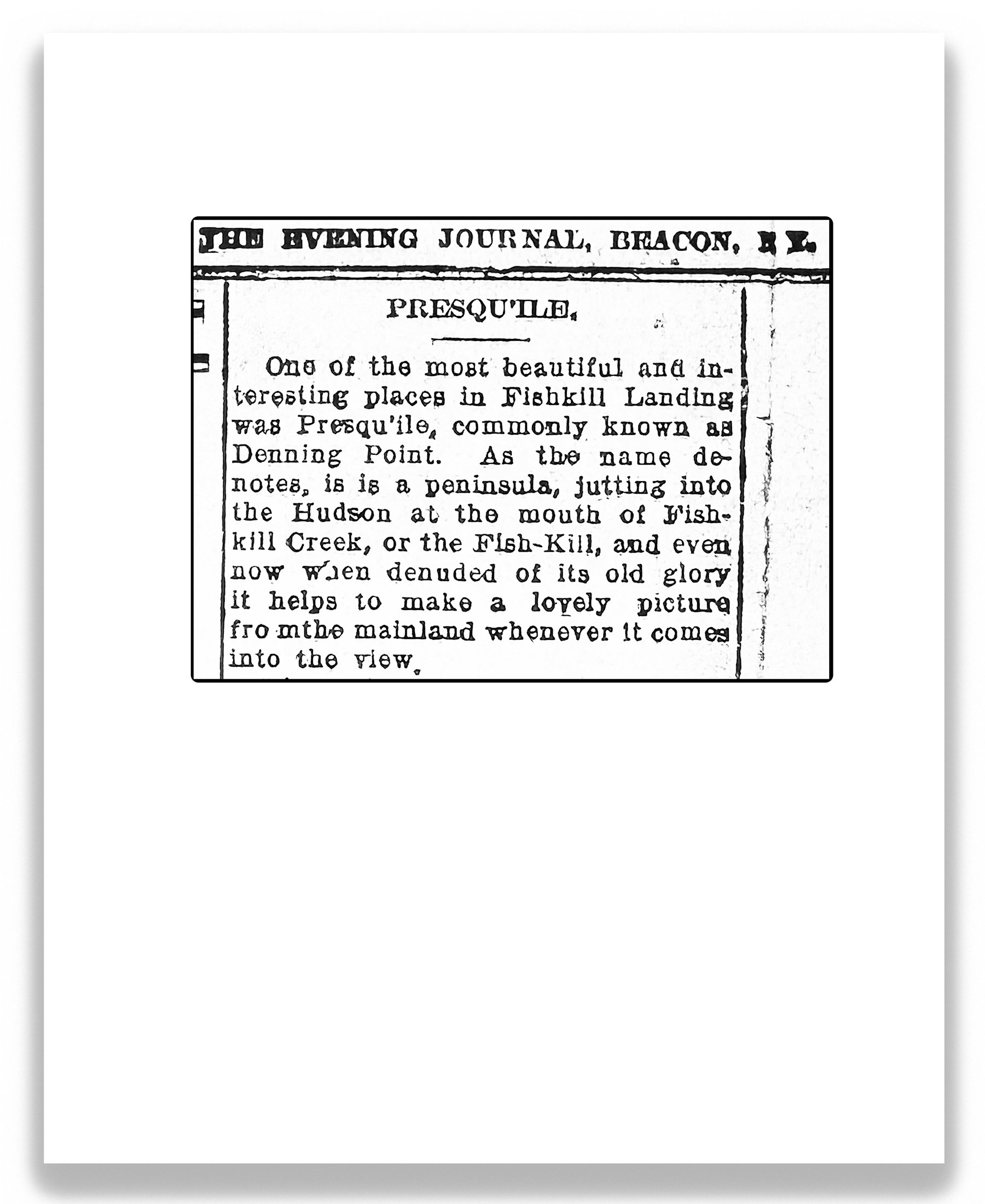
Presqu'ile, 2026, inkjet print on archival paper mounted on wood panel, 10 in x 8 in.
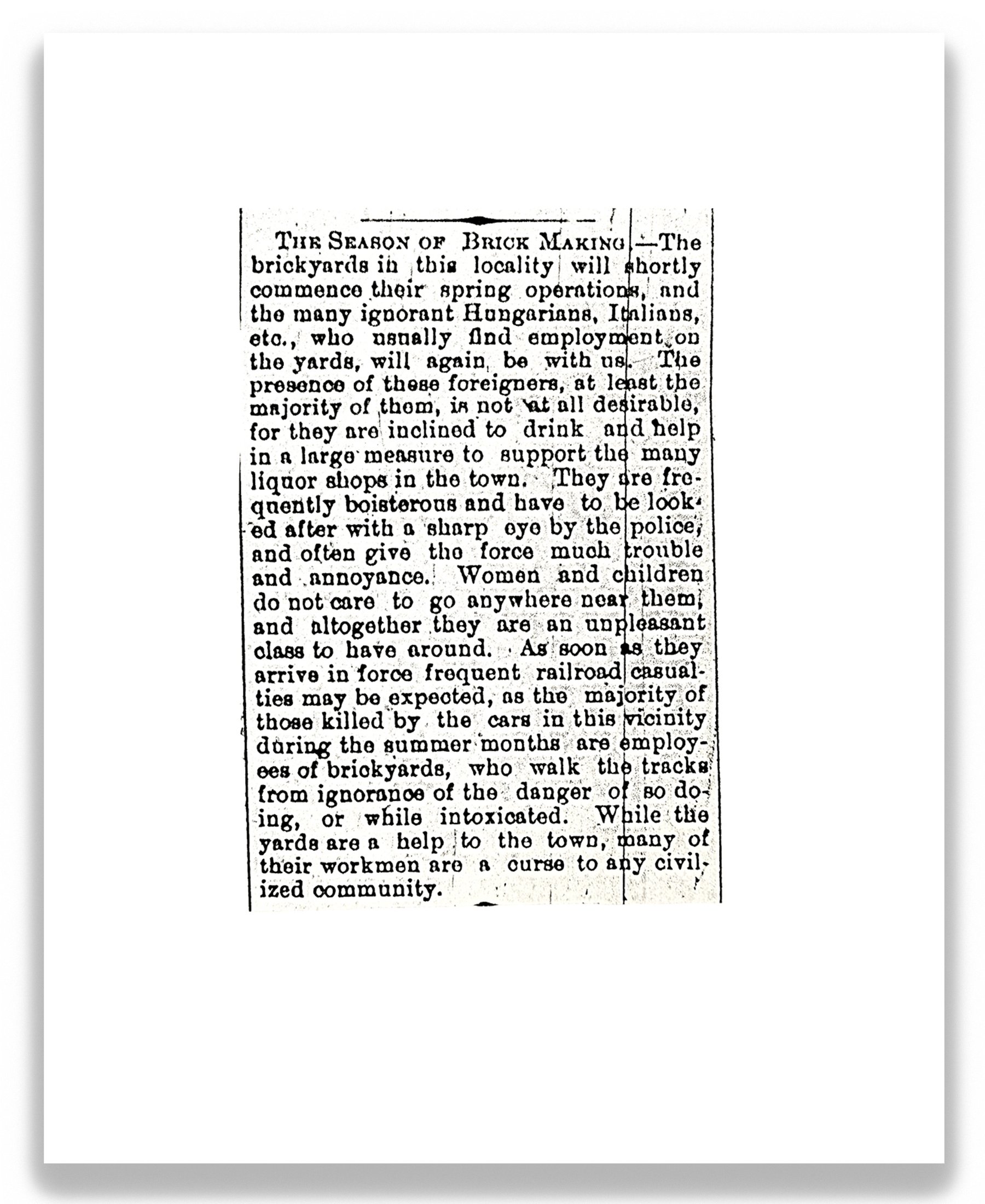
The Season of Brick Making, 2026, inkjet print on archival paper mounted on wood panel, 10 in x 8 in.
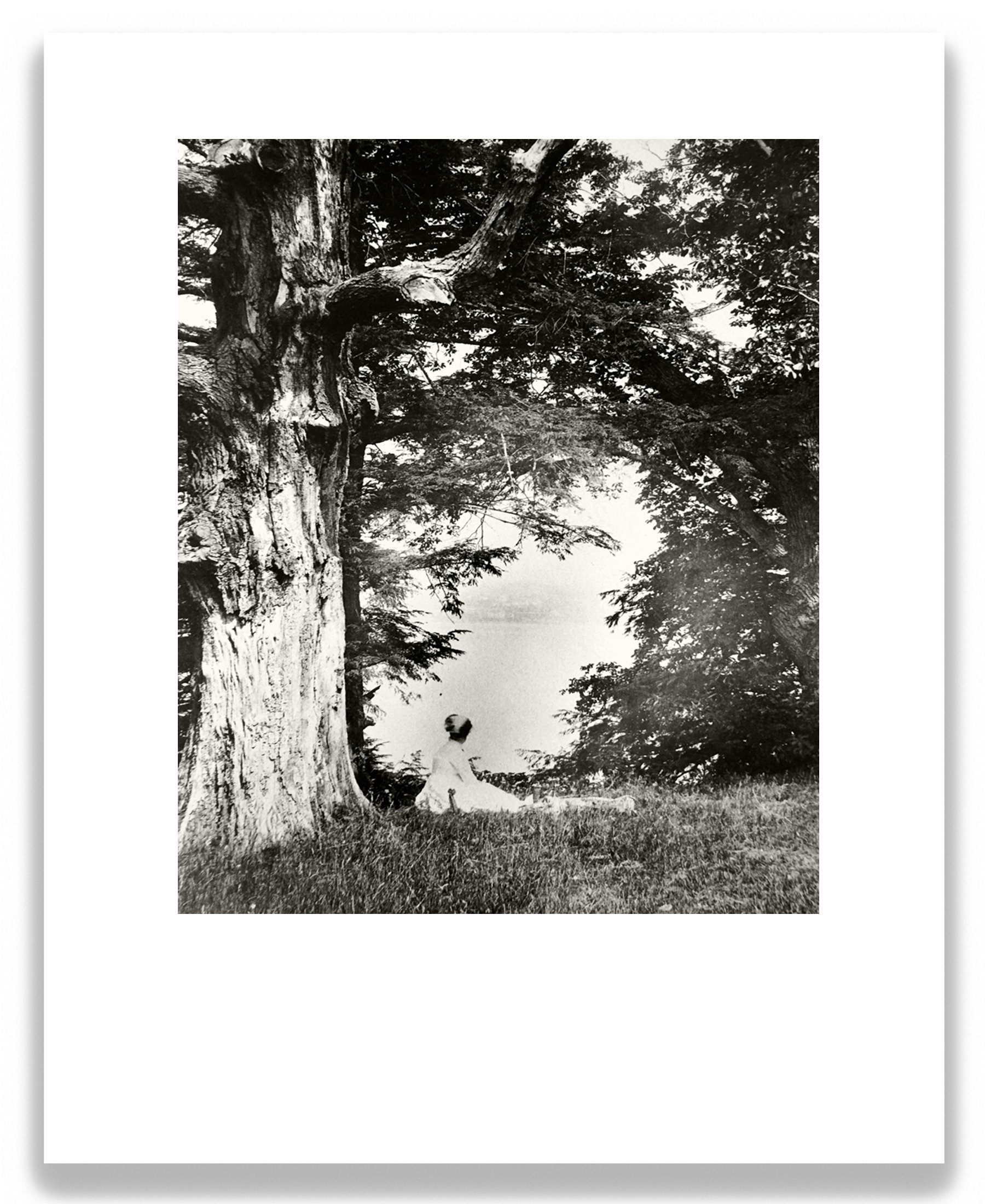
Sitting Beneath a Washington Oak (recto), 2026, inkjet print on archival paper mounted on wood panel, 10 in x 8 in.
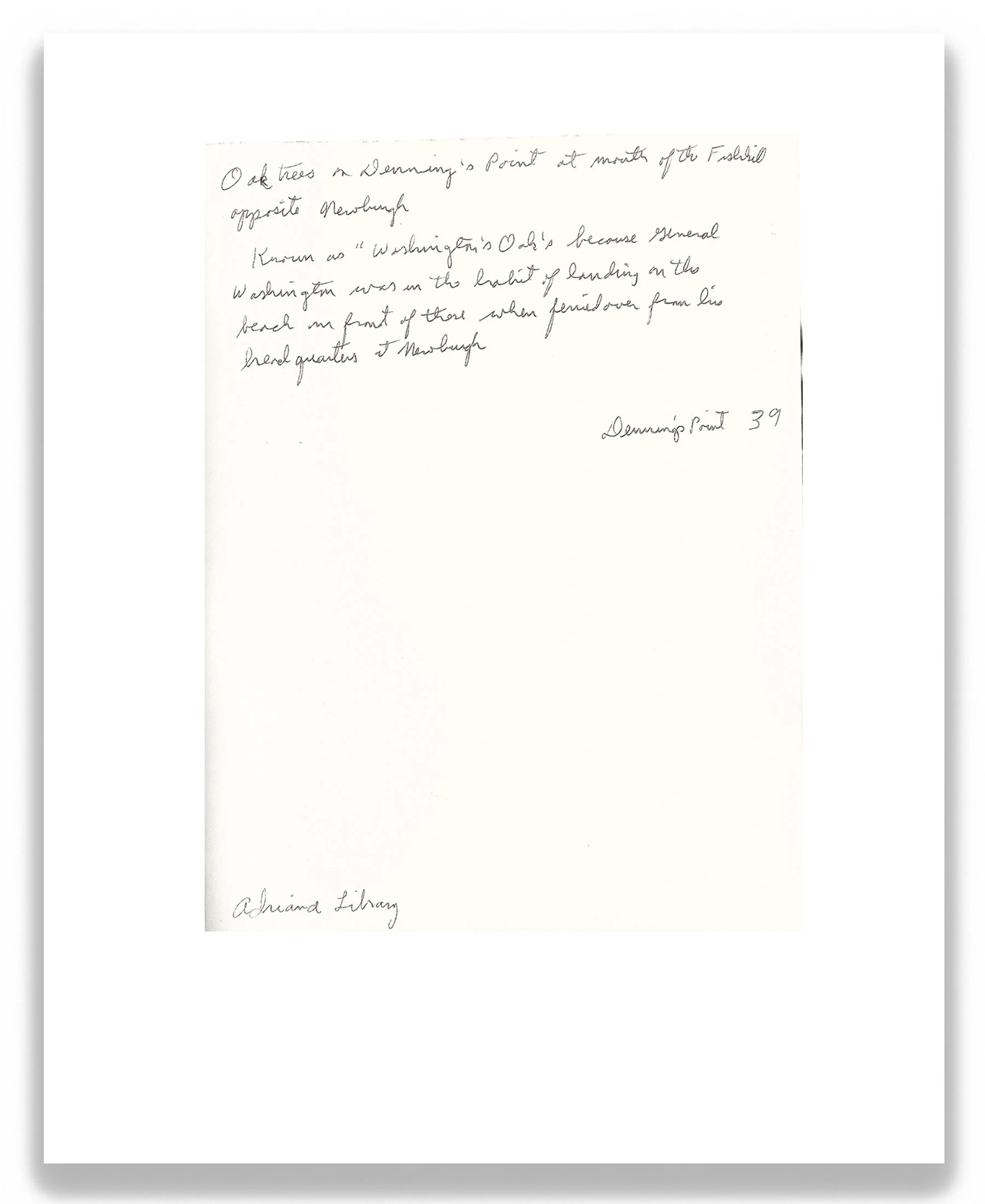
Sitting Beneath a Washington Oak (verso), 2026, inkjet print on archival paper mounted on wood panel, 10 in x 8 in.
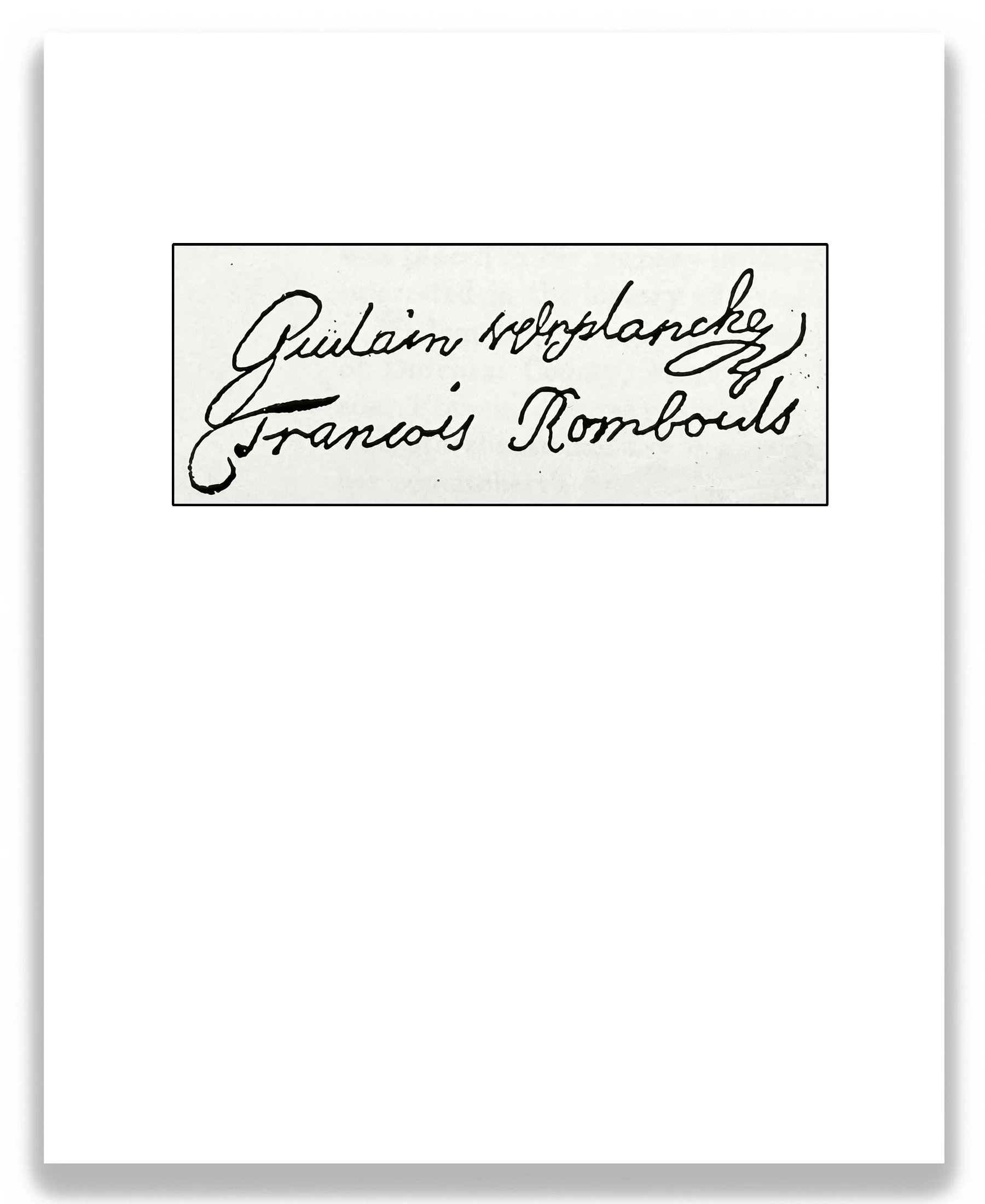
Verplancke and Rombouts Facsimile Signatures, 2026, inkjet print on archival paper mounted on wood panel, 10 in x 8 in.